

GEOSPATIAL FRONTIERS
A Publication by Project Geospatial
LOOKING BEYOND
THE MAP
Geospatial Frontiers, a new publication from Project Geospatial, brings together leading voices and experts from across the geospatial ecosystem to tackle the industry's most pressing challenges. Through in-depth articles and discussions, Geospatial Frontiers aims to explore innovative solutions and spark critical conversations that will shape the future of geospatial technology and its applications.
Contributing Authors






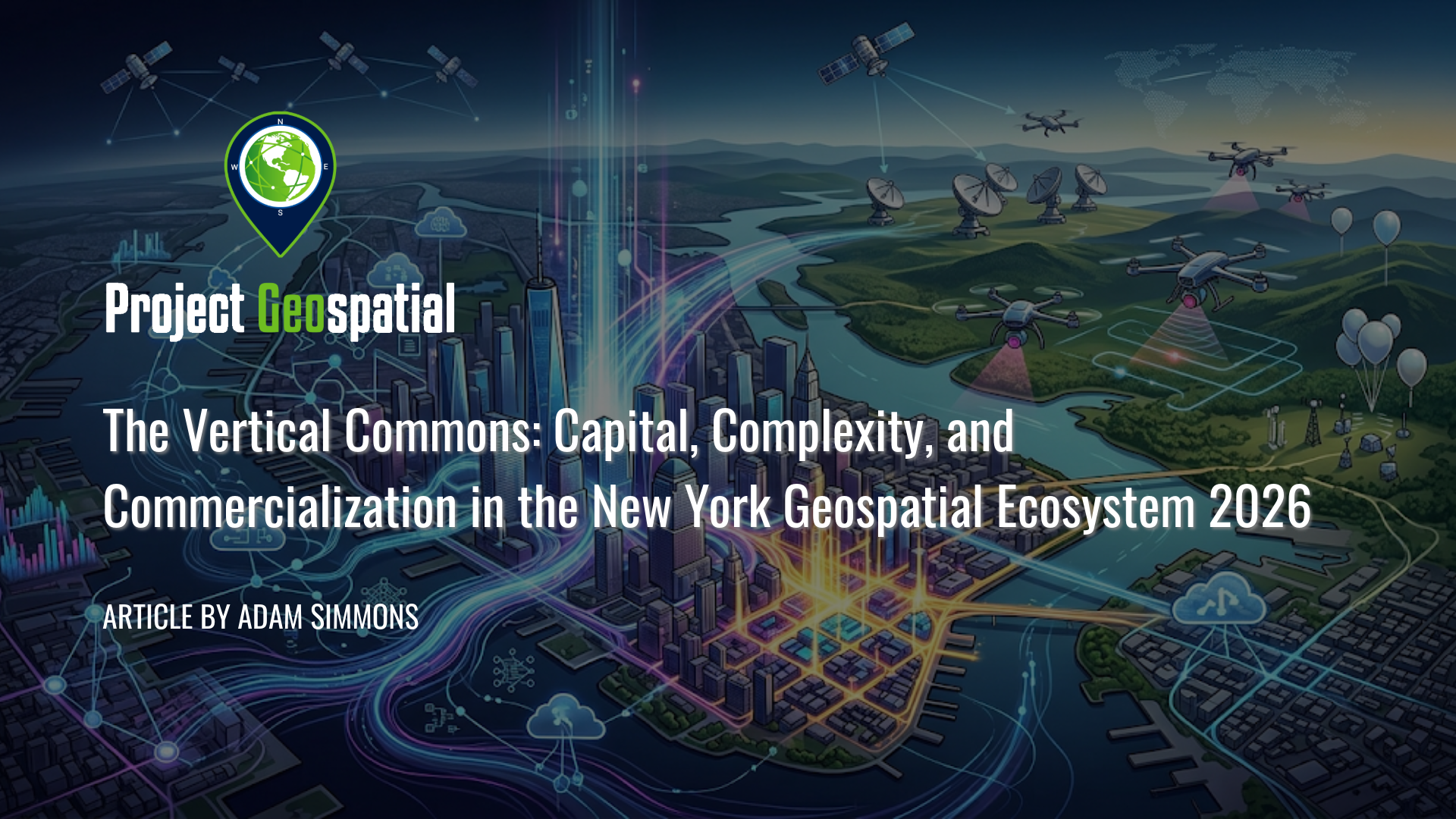
The Vertical Commons: Capital, Complexity, and Commercialization in the New York Geospatial Ecosystem 2026
The unique dynamics of the New York geospatial ecosystem are a decentralized commercial powerhouse driving the global location intelligence market. Unlike traditional defense-centric regional hubs, New York operates as a bifurcated empire: a downstate software engine powering algorithmic hedge funds, proptech valuations, and urban digital twins, paired with an upstate hardware frontier specializing in remote sensing, satellite analytics, and uncrewed aerial systems. Discover how this highly competitive environment leverages massive venture capital and enterprise SaaS demand to modernize megacity utility grids and completely redefine the commercial application of spatial data.
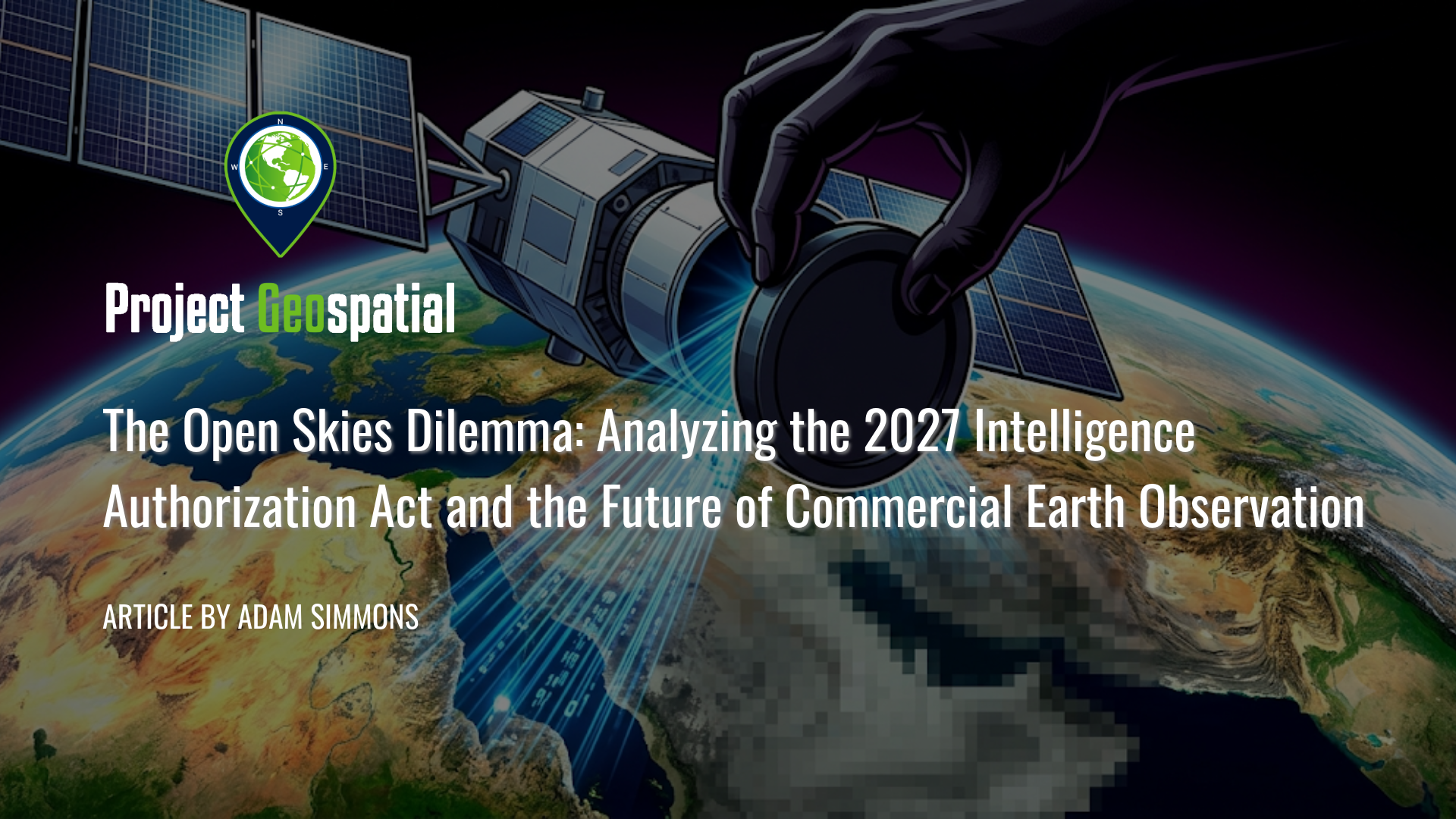
The Open Skies Dilemma: Analyzing the 2027 Intelligence Authorization Act and the Future of Commercial Earth Observation
The 2027 Intelligence Authorization Act (H.R. 9624) aims to mandate strict blackouts on U.S. commercial satellite imagery in the name of national security. However, in an era of global orbital abundance, this proposed government censorship threatens to cripple open-source intelligence (OSINT), betray the democratic spirit of the First Amendment, and cede America's Earth observation dominance to foreign competitors. Discover why weaponizing federal contracts to force "orbital blindness" is a profound strategic and moral miscalculation.
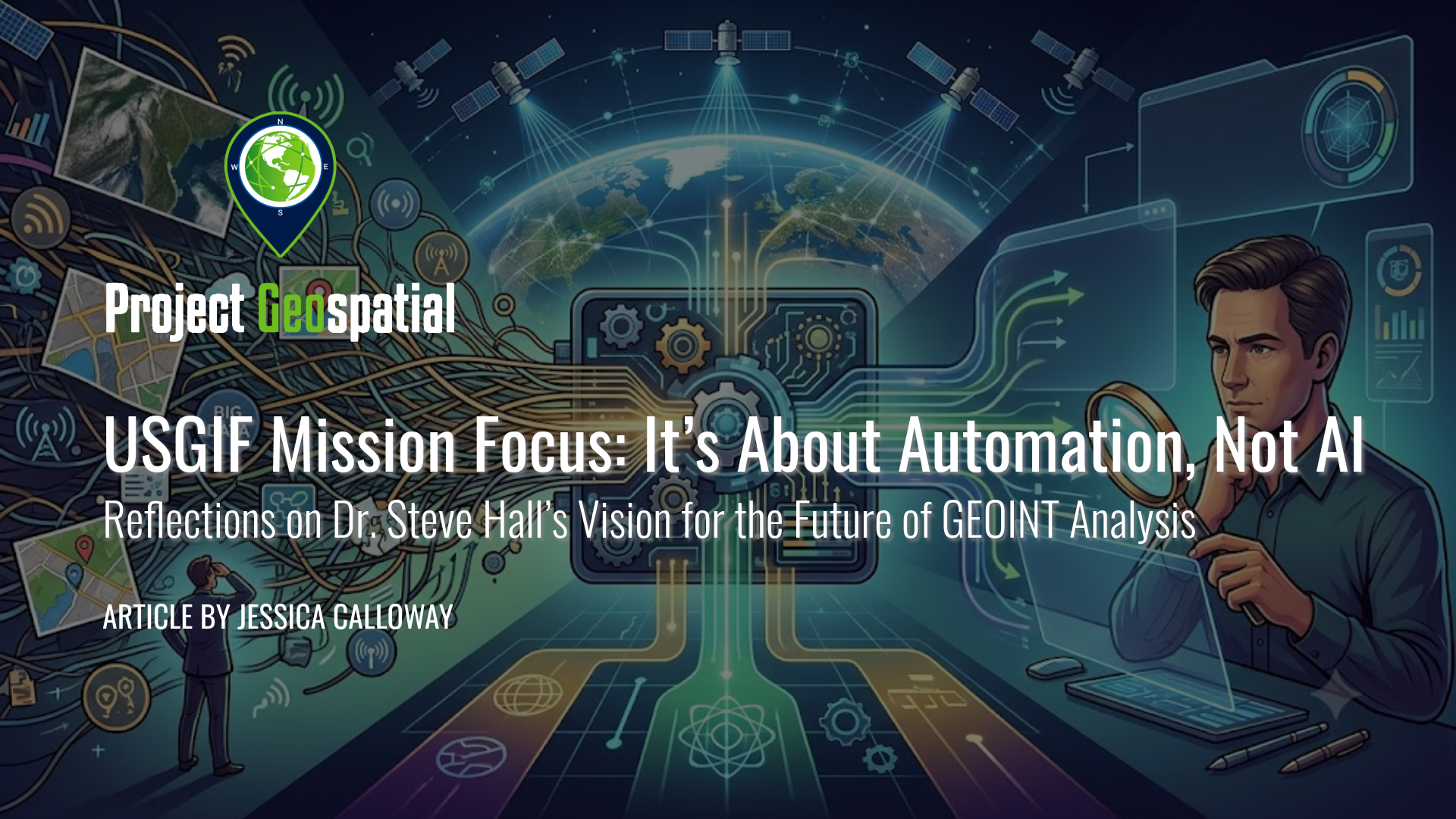
USGIF Mission Focus: It’s About Automation, Not AI
Discover why NGA’s Deputy Director of Analysis, Dr. Steve Hall, believes the future of GEOINT is driven by automation rather than just artificial intelligence. In this recap of the recent USGIF Mission Focus event, explore how big data pipelines and automated workflows are empowering intelligence analysts to focus on their greatest competitive advantage: human expertise, critical thinking, and complex problem-solving.
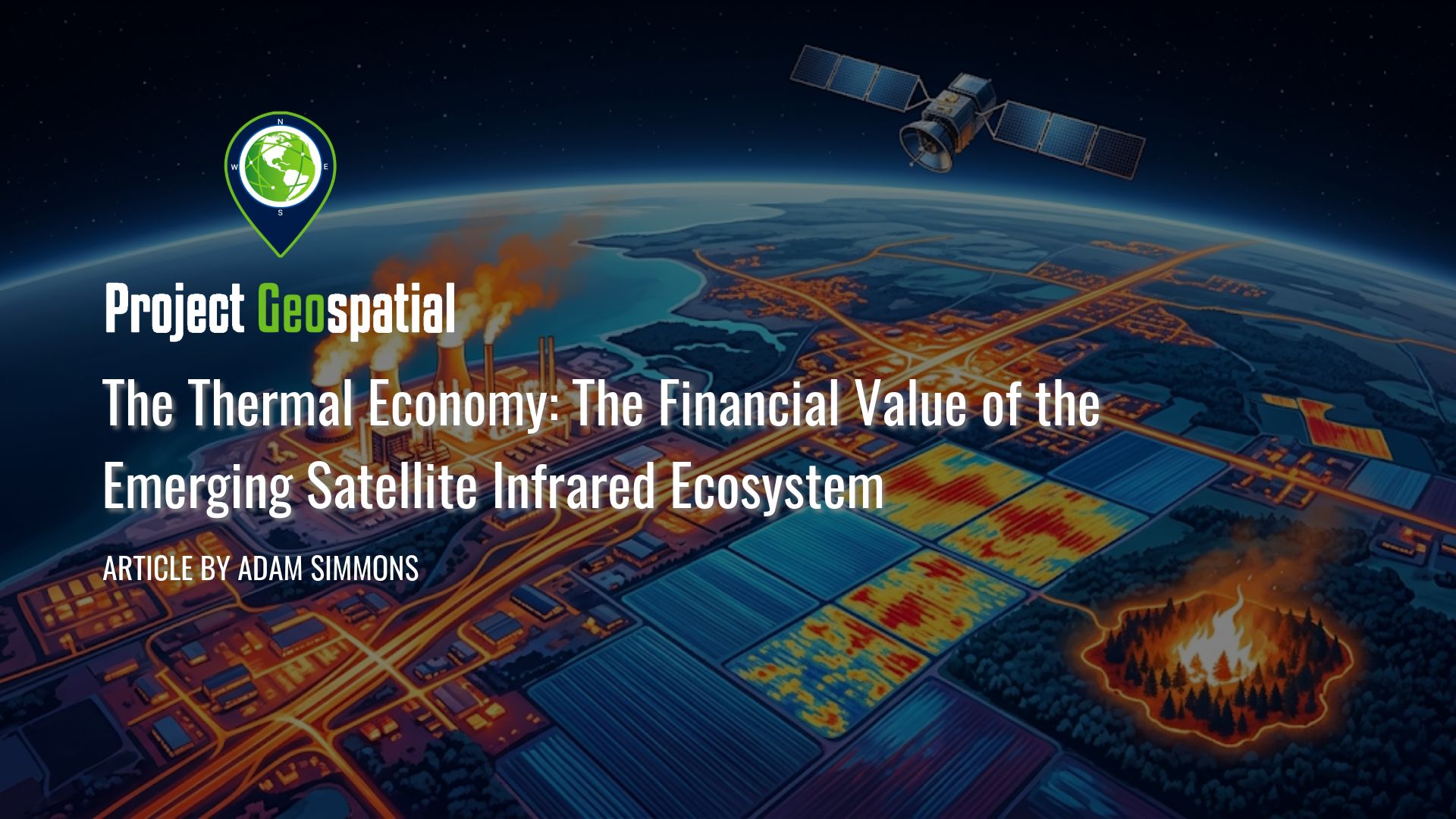
The Thermal Economy: The Financial Value of the Emerging Satellite Infrared Ecosystem
Discover how commercial satellite infrared and thermal energy intelligence are transforming the Earth observation market from commoditized imagery into high-margin operational signals. This comprehensive analysis explores how tracking thermodynamic data provides an unbribable edge for commodity trading, parametric insurance, and national defense. Move beyond superficial visual acuity and unlock the predictive financial power of the global thermal energy economy.
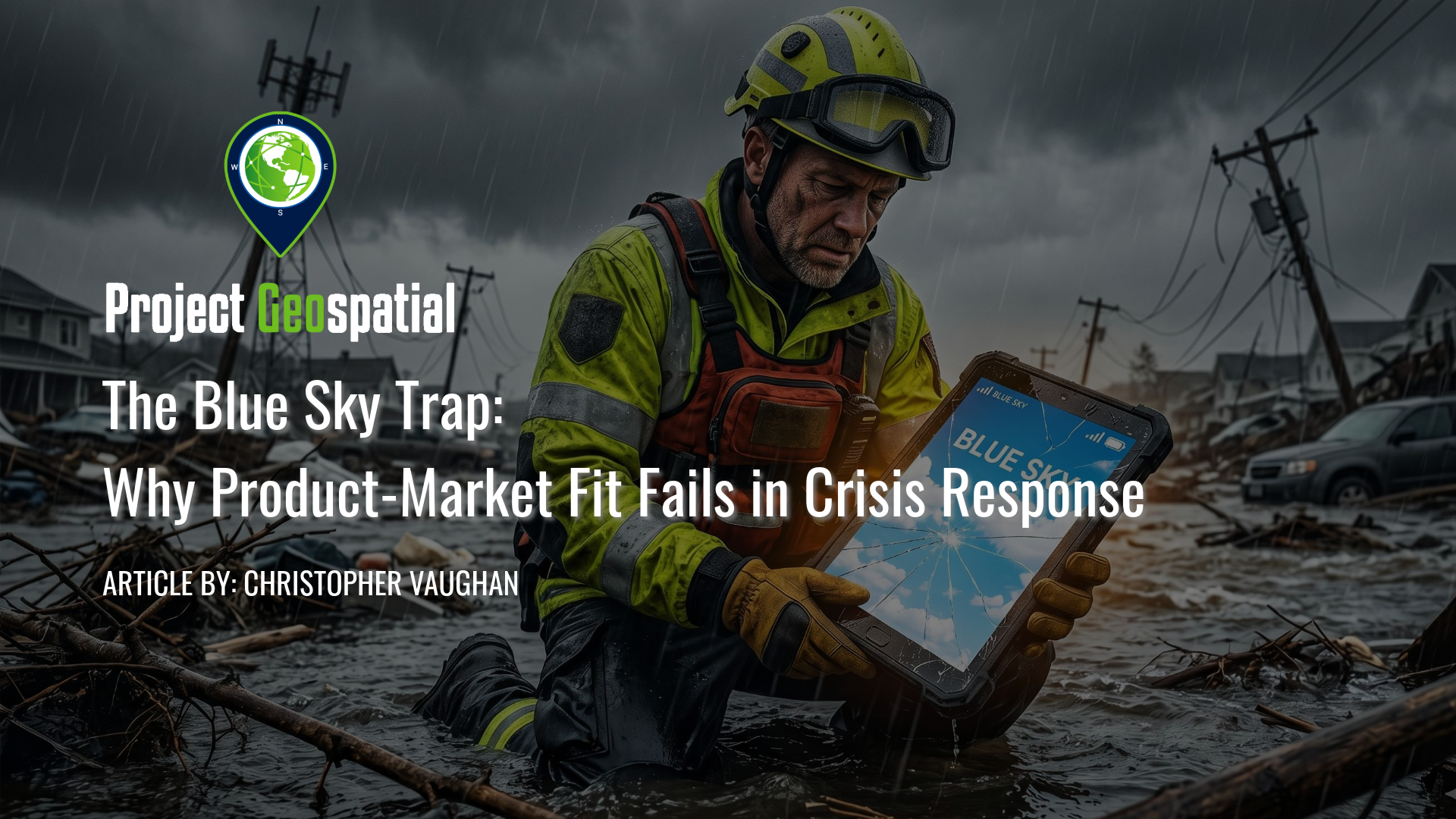
The Blue Sky Trap: Why Product-Market Fit Fails in Crisis Response
Why does cutting-edge tech so often fail when natural disasters strike? In The Blue Sky Trap: Why Product-Market Fit Fails in Crisis Response, industry expert Chris explores the dangerous disconnect between climate-controlled Silicon Valley development and the brutal, offline reality of emergency management. Discover why standard SaaS models crumble in chaotic "Gray Sky" environments and learn the non-negotiable design principles, such as offline-first architecture, low-bandwidth optimization, and standard-adjacent integration, required to build disaster tech that first responders can actually trust. Whether you are a tech founder, product manager, or public safety professional, learn how to avoid the Blue Sky Trap and design resilient tools that save lives when the grid goes down.
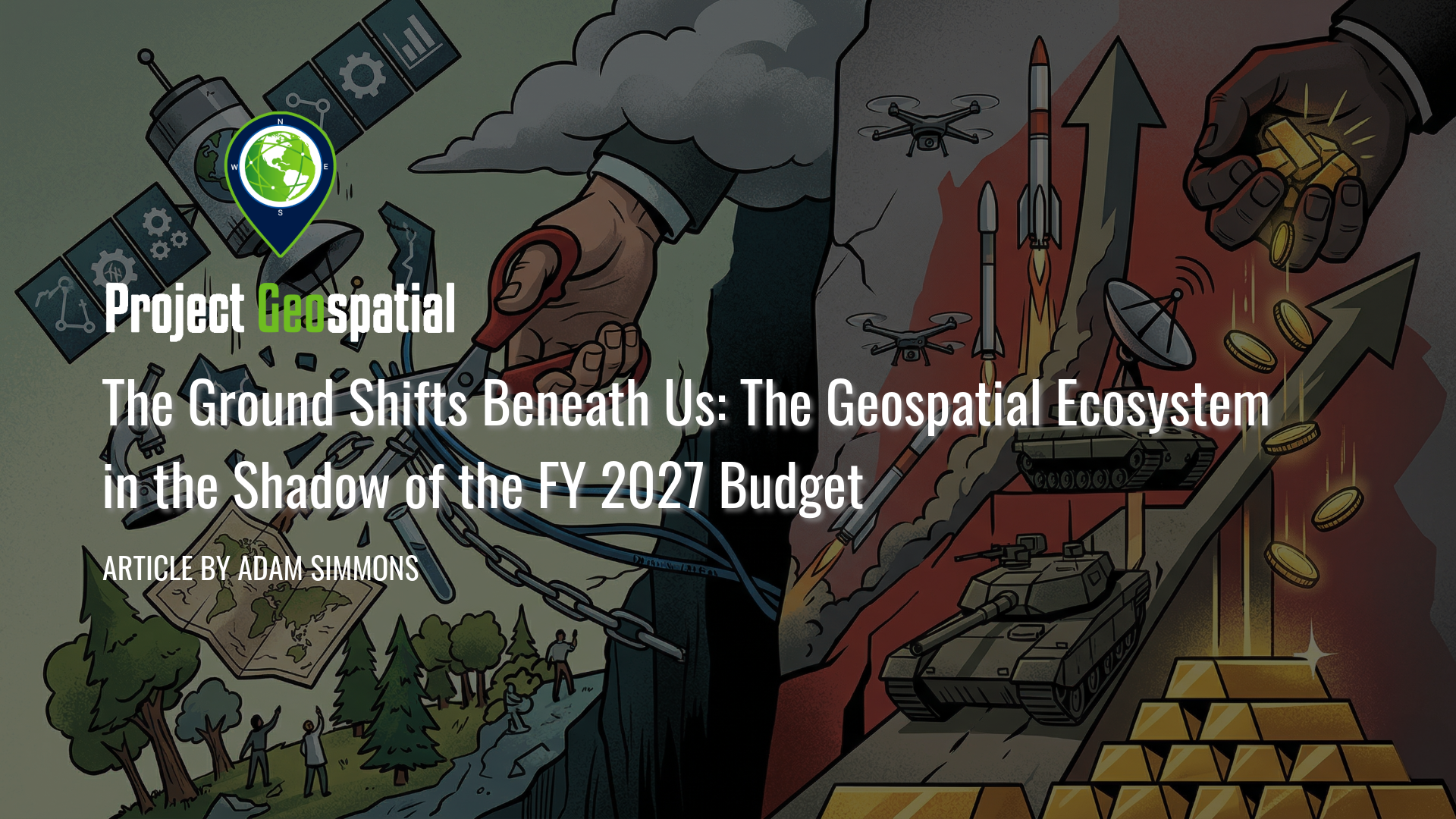
The Ground Shifts Beneath Us: The Geospatial Ecosystem in the Shadow of the FY 2027 Budget
The Fiscal Year 2027 budget request signals a seismic shift in American priorities, proposing a staggering $1.5 trillion for national defense while systematically dismantling decades of civilian Earth science and environmental monitoring. As the administration pivots toward a "Department of War" and aggressive commercial space acquisition , vital programs like NASA’s SERVIR and the USGS Ecosystems Mission Area face total elimination, threatening the foundational data streams that power global food security and domestic disaster response. This comprehensive analysis explores the deepening divide within the geospatial ecosystem, the rise of private-sector intelligence, and the long-term strategic risks of abandoning open-source scientific leadership in the face of intensifying global competition. How will this radical realignment of federal funding redefine the future of spatial awareness and national security?
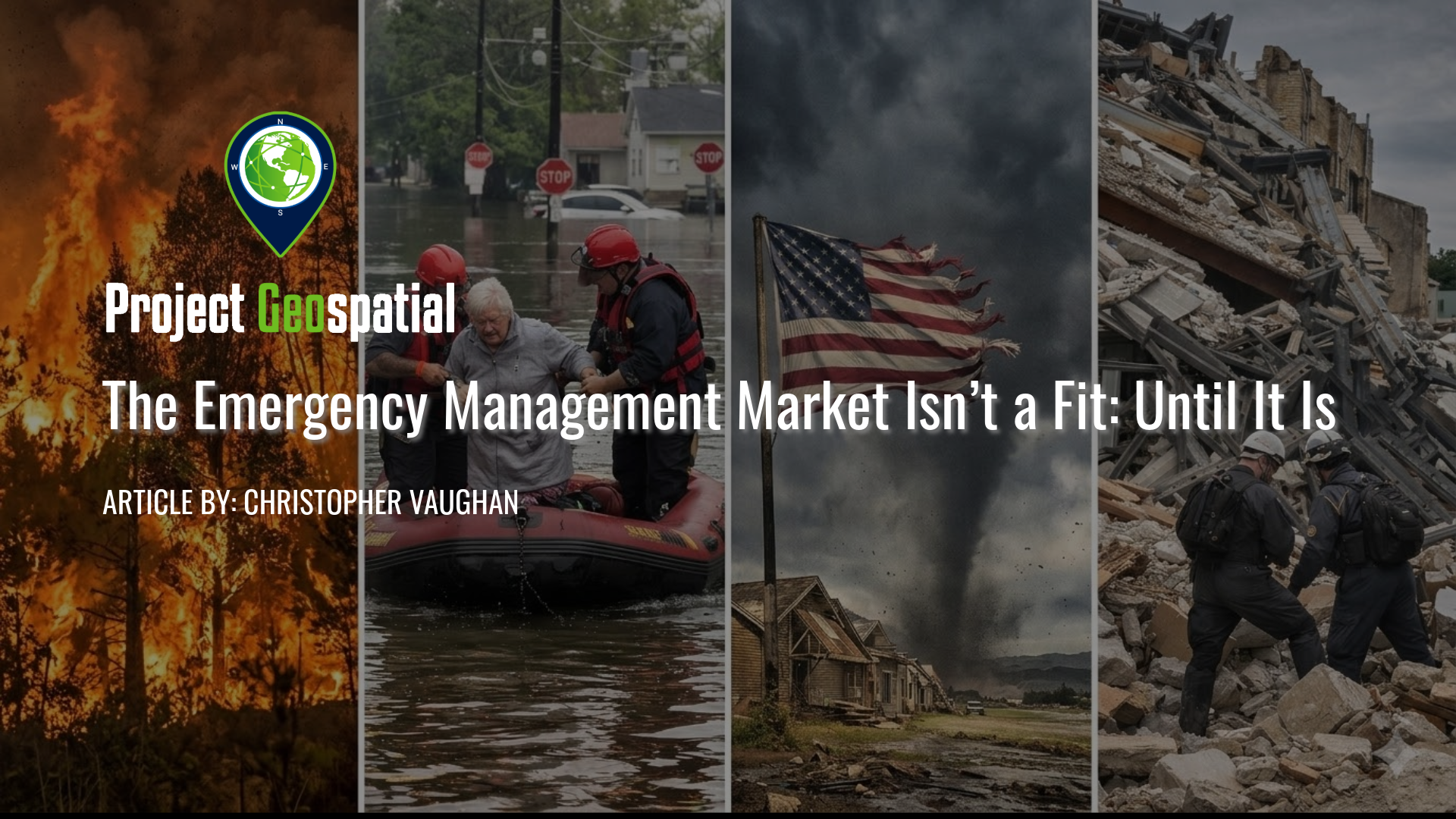
The Emergency Management Market Isn’t a Fit: Until It Is
The emergency management market is often dismissed by tech founders and investors as a "slow" and "bureaucratic" sector. However, as disasters become more frequent and expensive, this $137 billion "sleeping giant" is rapidly evolving into a mission-critical landscape. This article explores the shift from outdated "boots-on-the-ground" processes to high-velocity geospatial analytics and AI-driven assessments that shorten the gap between a survivor's worst day and their first recovery check. Learn why readiness matters, how to achieve true product-market fit in a crisis, and why the "unattractive" EM market is the only one that truly matters when the sirens start.
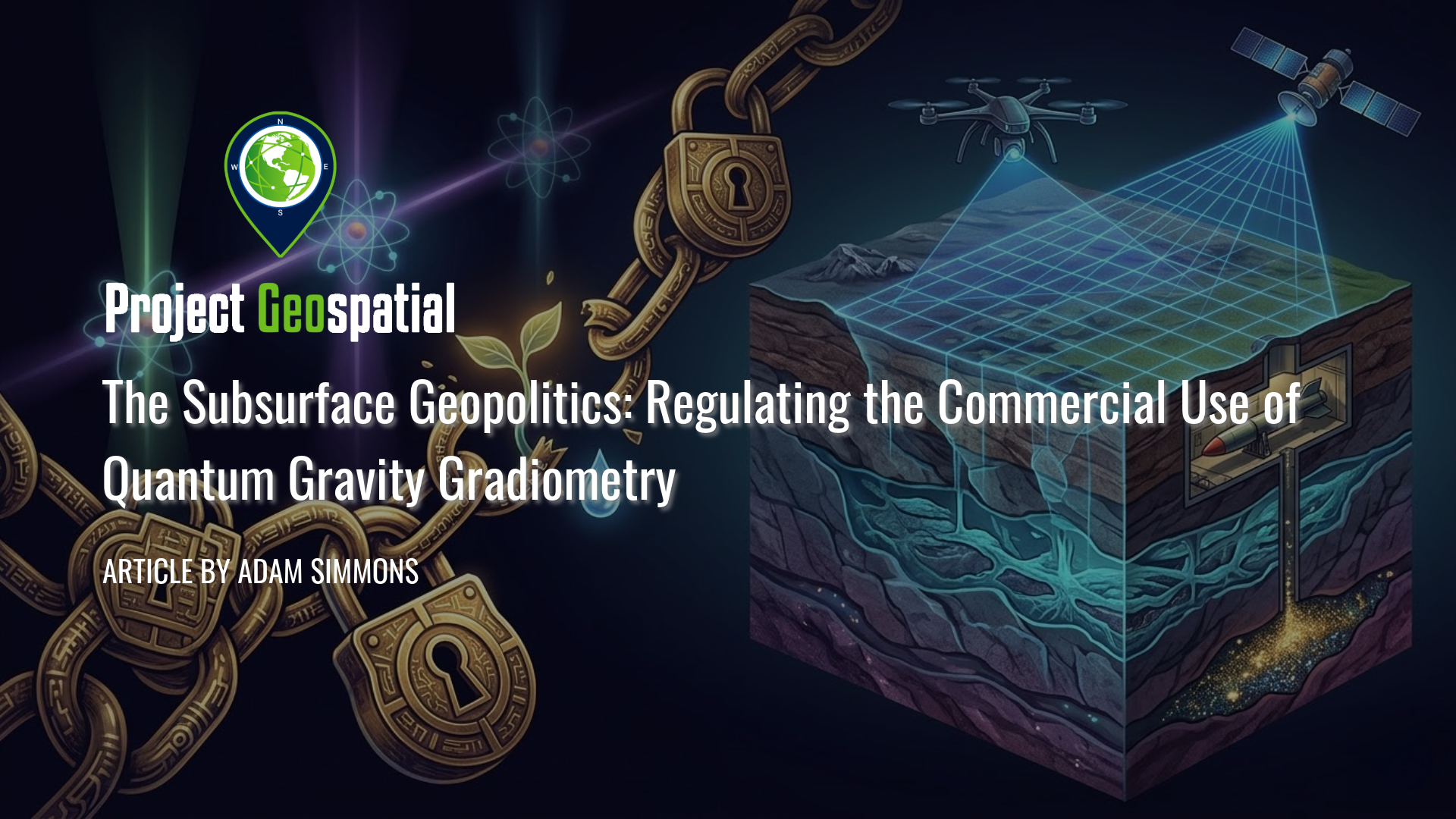
The Subsurface Geopolitics: Regulating the Commercial Use of Quantum Gravity Gradiometry
As Quantum Gravity Gradiometry (QGG) renders the Earth’s crust functionally transparent, a high-stakes geopolitical battle is emerging over the regulation of the subsurface. This article explores the tension between the commercial promise of uncovering critical minerals and tracking climate change against the national security risks of exposing clandestine military assets. Discover how international frameworks and "shutter control" policies are evolving to manage this revolutionary sensing technology, where the ability to see deep underground is transforming global transparency, resource competition, and strategic stability.
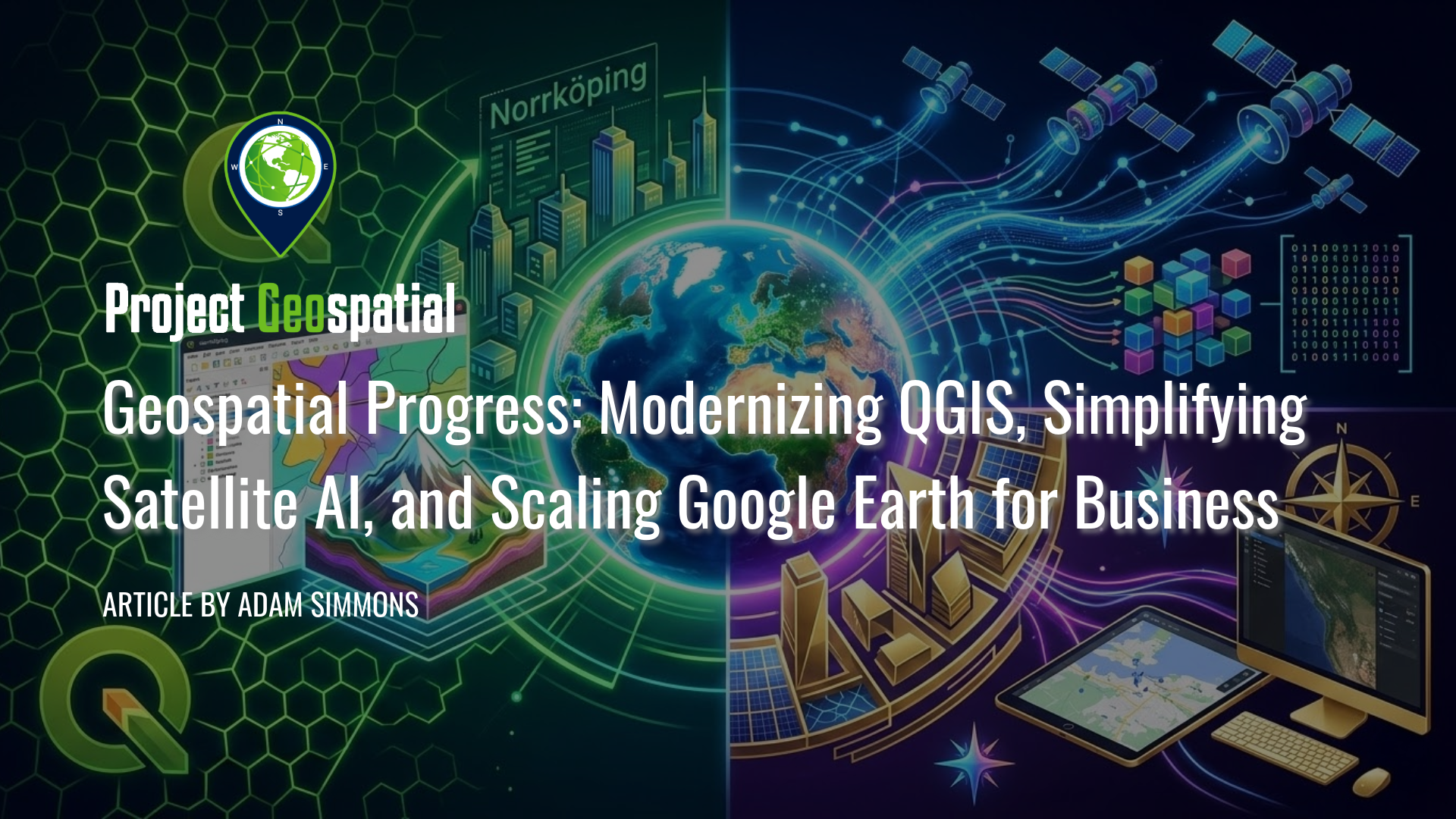
Geospatial Progress: Modernizing QGIS, Simplifying Satellite AI with Alpha Earth, and Scaling Google Earth for Business
The geospatial industry witnessed a transformative week with three major announcements that bridge the gap between open-source legacy and AI-driven enterprise intelligence. Leading the charge is the long-awaited release of QGIS 4.0 "Norrköping," a massive structural leap that migrates the premier open-source desktop GIS to the Qt6 framework for superior performance and security. Simultaneously, Google DeepMind unveiled its 2025 AlphaEarth Foundations update, introducing 64-dimensional satellite embeddings that allow developers to "see through" cloud cover and decode complex planetary variables with unprecedented mathematical precision. Finally, Google Earth officially transitioned into a powerful business ecosystem with the launch of its Professional and Professional Advanced tiers, integrating Gemini-powered "agentic" AI and domain-specific data layers for high-stakes urban planning and sustainability workflows. Together, these releases signal a new era where raw planetary data is no longer a bottleneck but an analysis-ready instrument for global decision-making.
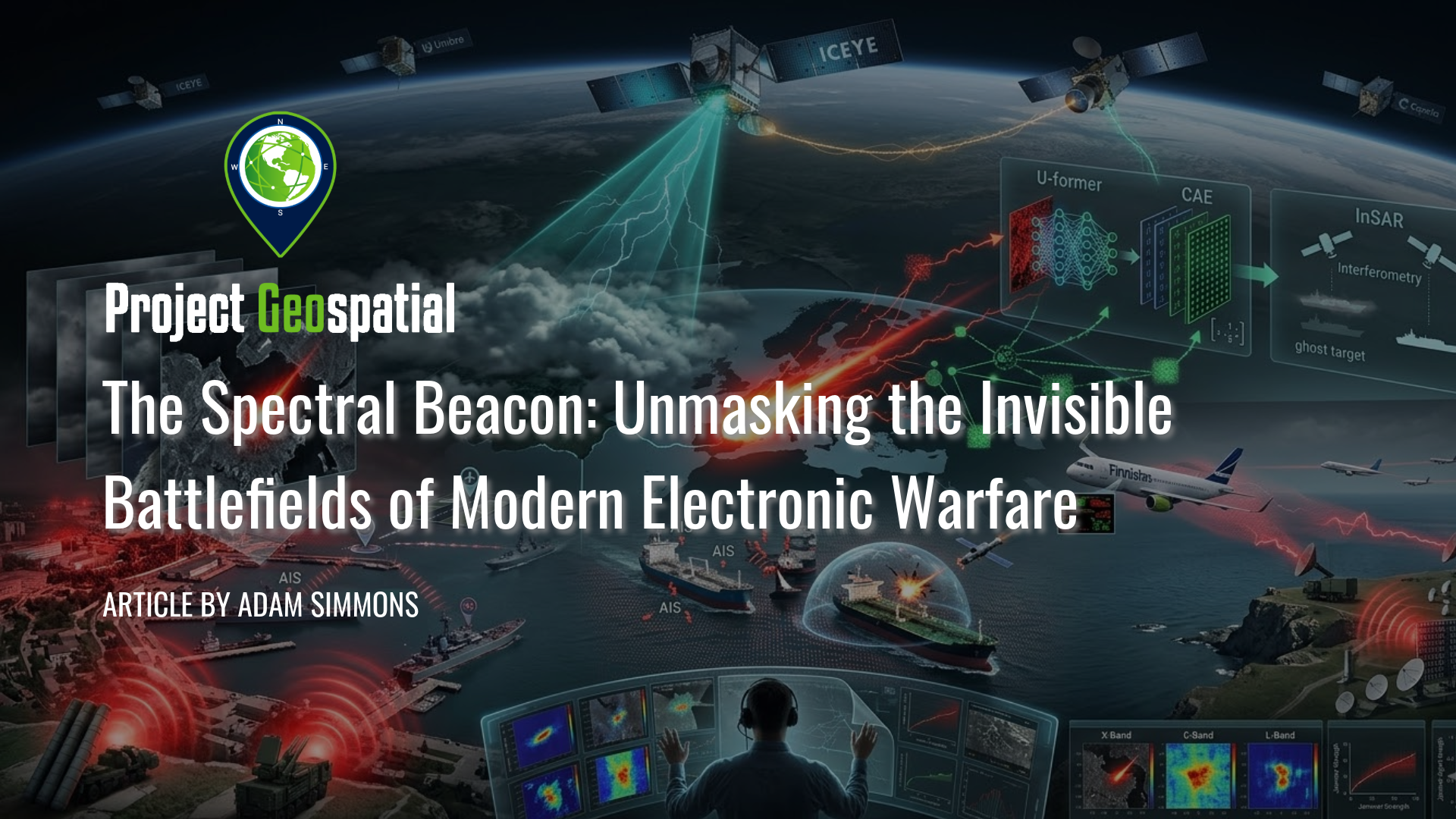
The Spectral Beacon: Unmasking the Invisible Battlefields of Modern Electronic Warfare
Explore how advanced Electronic Warfare (EW) is reshaping modern conflict, from disrupting satellite signals and misdirecting global shipping to the subtle use of AI in spectral warfare. As the world grows increasingly dependent on GPS and other critical RF bands, the contest for spectral dominance moves beyond science fiction into a very real and present national security imperative. This deep dive into the technology and tactics of invisible conflict reveals how electronic signals can disable high-tech forces without firing a single bullet.
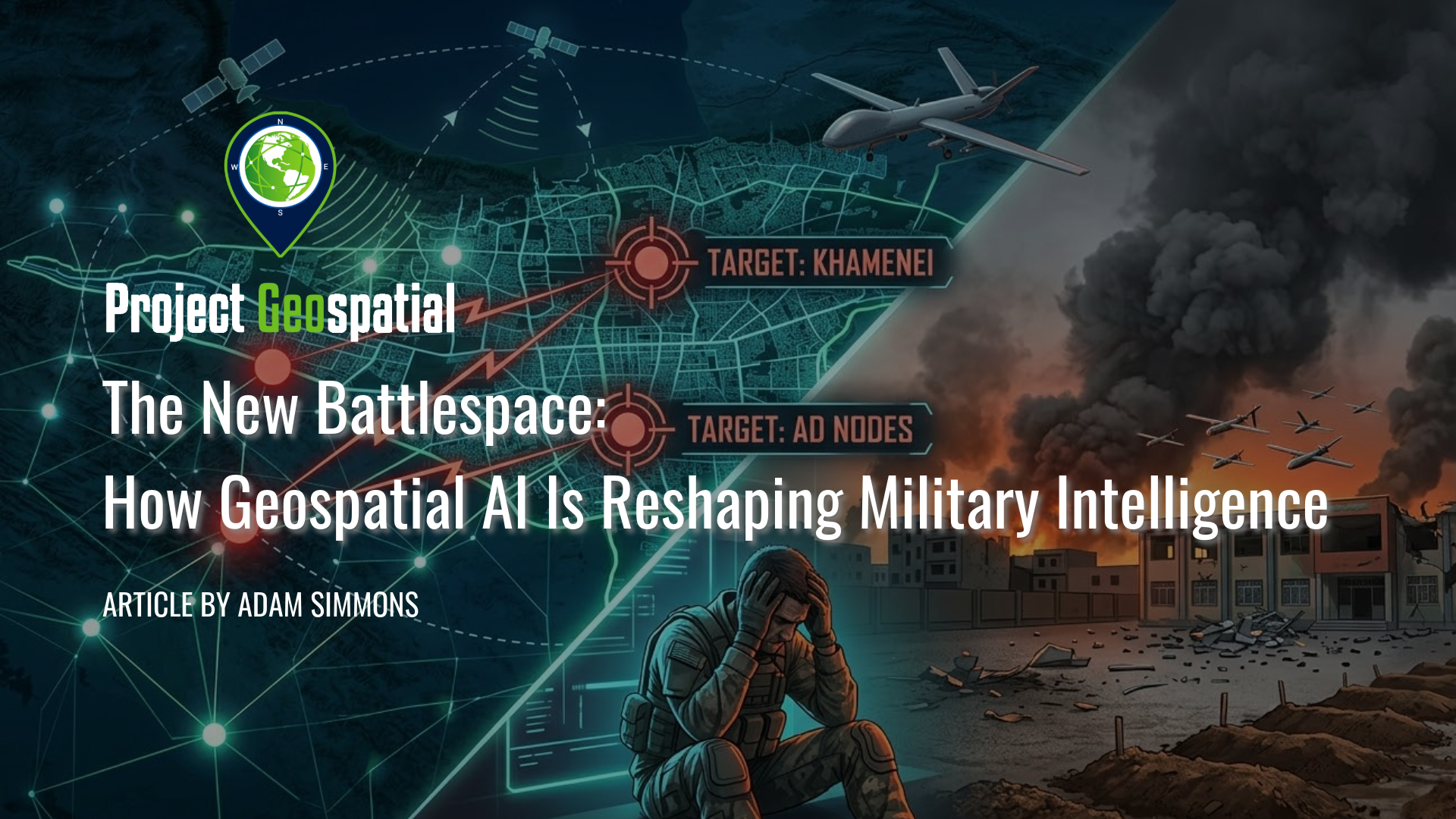
The New Battlespace: How Geospatial AI Is Reshaping Military Intelligence
The 2026 conflict in Iran marks a terrifying turning point in military history: the birth of the algorithmic battlespace. Through Operation Epic Fury, the United States and Israel have deployed a "kill web" driven by Geospatial AI, compressing decision-making from weeks to mere seconds. While systems like Project Maven and autonomous drone swarms offer unprecedented tactical precision, the human cost remains devastatingly high, evidenced by the tragic Minab school bombing and the growing psychological toll on remote operators. As Silicon Valley giants like Anthropic and Palantir clash over the ethics of AI-driven warfare, the world faces a fractured global economy and a new reality where machine-speed violence outpaces human thought.

The Phoenix Project: A Challenge to the Community to Forge an Open-Source Successor to HIFLD
This article issues a compelling challenge to the community: to collaboratively forge an open-source successor to the vital HIFLD portal. We present a conceptual solution, not as a finished blueprint, but as a compass to guide a collective journey forward. Join the critical conversation on building a resilient, community-owned digital commons for national infrastructure data, reclaiming our shared responsibility in the wake of a crucial public resource going dark. This is a call to action for mappers, developers, emergency managers, and all stakeholders to define the future of accessible, authoritative geospatial data.
The Quantum Meridian: How a New Computing Paradigm is Redrawing the Map of the Geospatial Industry
Explore the dawn of Quantum-Geospatial Intelligence (Quantum GEOINT), a new era catalyzed by IonQ's landmark acquisition of Capella Space. This report dissects the fusion of quantum computing and Earth observation, detailing how technologies like Quantum Key Distribution (QKD) are creating unbreachable data security from orbit. Discover how quantum principles of superposition, entanglement, and interference are set to revolutionize geospatial analysis through advanced optimization for logistics and disaster response, quantum machine learning (QML) for satellite imagery, and high-fidelity climate simulations. We map the emerging ecosystem of key players, from IonQ and D-Wave to GDIT, and provide a forward-looking assessment of the challenges and strategic imperatives for navigating this transformative frontier

The Geodesy Crisis in the United States: A Comprehensive Analysis of its Importance, Workforce Challenges, and Potential Consequences
The United States is facing a looming crisis in its geodesy workforce, threatening the nation's capacity to maintain and advance this essential science. Our research delves into the definition, applications, and history of geodesy in the US, examining the workforce challenges and potential consequences if this crisis remains unaddressed.