


GEOSPATIAL FRONTIERS
A Publication by Project Geospatial
LOOKING BEYOND
THE MAP
Geospatial Frontiers, a new publication from Project Geospatial, brings together leading voices and experts from across the geospatial ecosystem to tackle the industry's most pressing challenges. Through in-depth articles and discussions, Geospatial Frontiers aims to explore innovative solutions and spark critical conversations that will shape the future of geospatial technology and its applications.
Contributing Authors






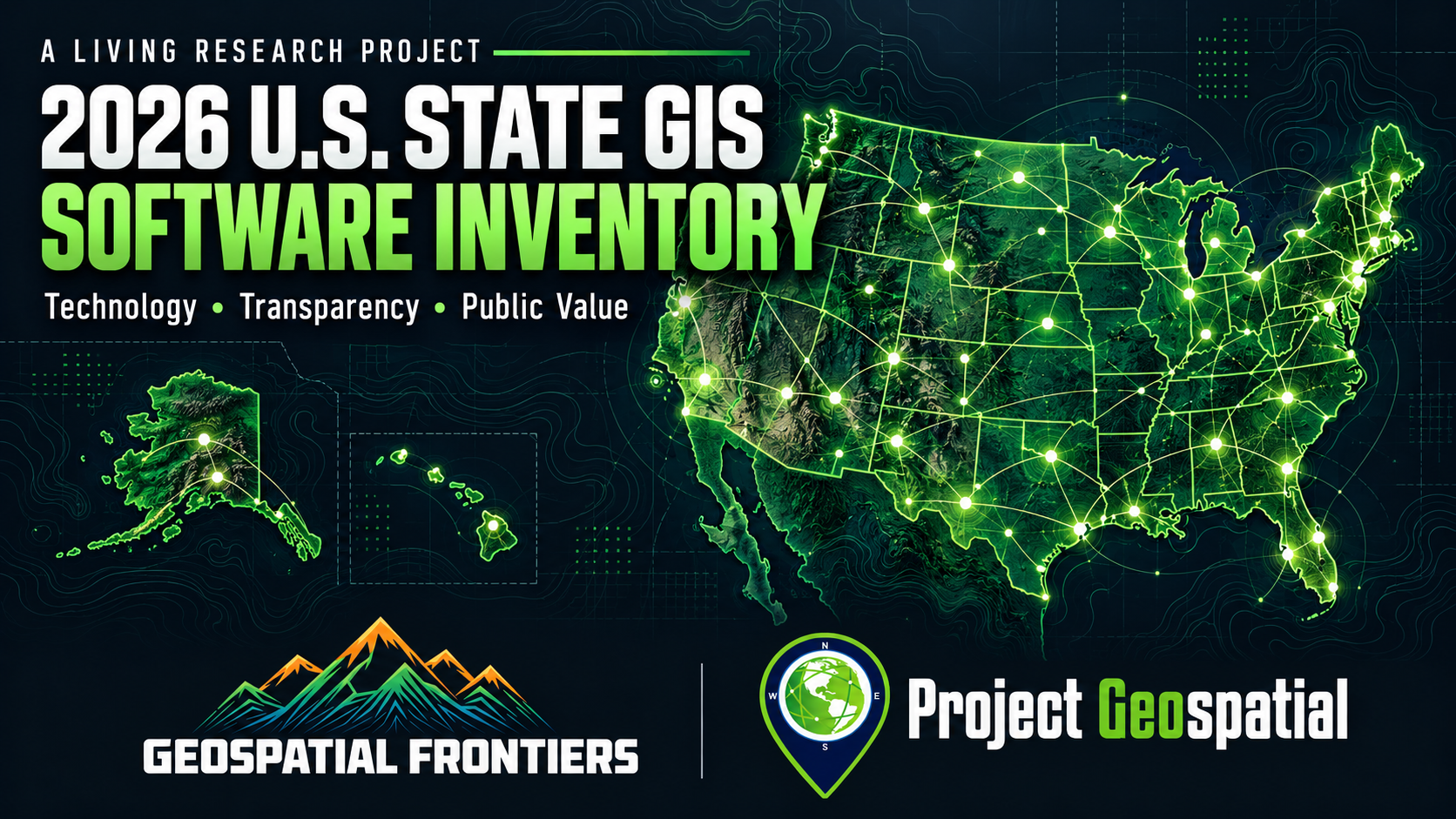
2026 U.S. State GIS Software Inventory
What software powers America’s state geospatial infrastructure, and what can the public verify about its cost and value? The 2026 U.S. State GIS Software Inventory from Geospatial Frontiers and Project Geospatial examines documented Esri, open-source, and other GIS technologies across all 50 states. Explore the inventory, comparison graphics, and analysis of procurement, platform choices, and transparency. Released as a living research project, this report will evolve with new evidence and contributions from state GIS offices, helping build a clearer picture of the technology behind public geographic information.
NORTH AMERICA GEOSPATIAL EVENTS
Welcome to the ultimate geospatial events directory, your curated guide to premier GIS conferences, Earth observation summits, remote sensing expos, and spatial analytics forums worldwide. Whether you are seeking defense and intelligence gatherings like GEOINT, enterprise GIS summits like Esri FedGIS, or commercial satellite technology expos, our continuously updated catalog tracks verified event dates, locations, registration pricing, and specialized focus tracks. Designed specifically for GIS analysts, spatial data scientists, cartographers, and geospatial leaders, this directory offers actionable pro-tips, target audience breakdowns, and networking ROI insights to help you plan your annual conference strategy with confidence.
The Landsat Commercial Transition: The Hard Part Is Making the Economics Work
NASA and the USGS are preparing for a historic shift: transitioning the Landsat program to rely on commercial Earth observation data by 2035. But as the Sustainable Land Imaging (SLI) Commercial Transition Initiative moves forward, it revives a decades-old question: what happens when a foundational public science mission is forced to operate under commercial economics? Explore the complex history of Landsat commercialization, the downstream economic value of free and open-access imagery, and the geopolitical risks of relying on the "New Space" market to sustain a 50-year scientific record.
Forging Leaders Beyond the Stars: A Personal Dispatch from Next Generation GEOINT
In this recap of the "Next Generation GEOINT: Forging Leaders" event, retired Rear Admiral Mike Studeman and retired Vice Admiral Bob Sharp share decades of naval intelligence and defense expertise. Explore their actionable insights on building the unbreakable currency of trust, cultivating daily habits for success, and empowering every voice to solve complex intelligence challenges. Read the full dispatch to learn how to authentically grow your career and influence within the GEOINT community.
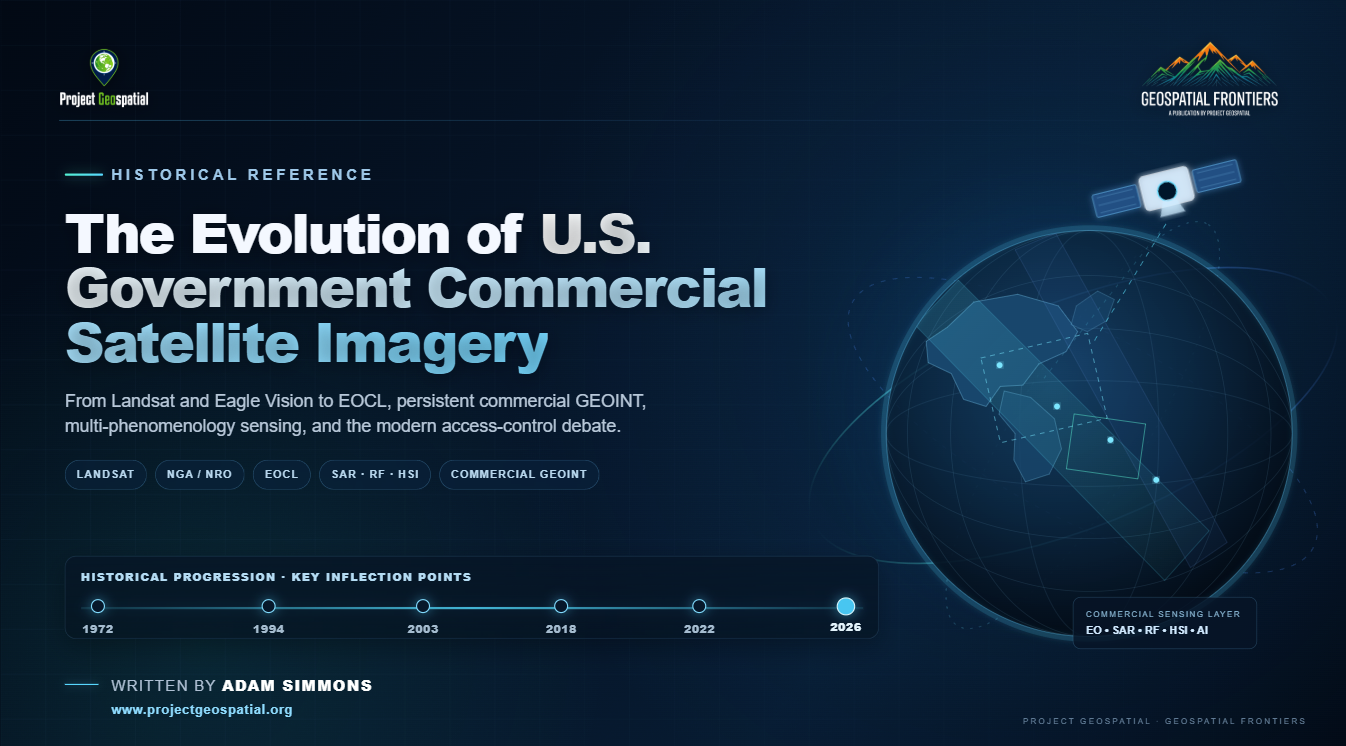
The Evolution of Commercial Satellite Imagery in the U.S. Government
Commercial satellite imagery has evolved from a tightly controlled national-security capability into a foundational layer of the modern U.S. geospatial intelligence architecture. This historical overview traces that transformation from Landsat, EOSAT, Eagle Vision, and the early commercialization experiments through ClearView, NextView, EnhancedView, EOCL, and today’s expanding commercial sensing ecosystem of optical imagery, SAR, hyperspectral, radio frequency, AI, and analytics. It also examines the policymakers, intelligence leaders, scientists, companies, and acquisition strategies that helped build the government-commercial partnership—and the emerging 2026 debate over access, managed distribution, national security, and how the United States governs an increasingly global and commercially driven GEOINT environment.
The Vertical Commons: Capital, Complexity, and Commercialization in the New York Geospatial Ecosystem 2026
The unique dynamics of the New York geospatial ecosystem are a decentralized commercial powerhouse driving the global location intelligence market. Unlike traditional defense-centric regional hubs, New York operates as a bifurcated empire: a downstate software engine powering algorithmic hedge funds, proptech valuations, and urban digital twins, paired with an upstate hardware frontier specializing in remote sensing, satellite analytics, and uncrewed aerial systems. Discover how this highly competitive environment leverages massive venture capital and enterprise SaaS demand to modernize megacity utility grids and completely redefine the commercial application of spatial data.

Integrating Commercial and Government Software for GEOINT Superiority: A Strategic Framework for Congress and Senior DoW/IC Leaders
The GOTS Dilemma: Is the DoW Finally Ready for a Commercial-First Reality? Read Keith Barber's unfiltered white paper on the systemic failures of government software acquisition (GOTS) and the urgent need for the Department of War (DoW) to embrace a commercial-first (COTS) strategy. Barber argues that duplicating commercial tech is a strategic risk, hindering lethality and speed in the geospatial intelligence ecosystem. Dive into the full analysis and our exclusive "So What" breakdown to understand how Secretary Hegseth's new directives could reshape the future of GEOINT and defense contracting below.
The Open Skies Dilemma: Analyzing the 2027 Intelligence Authorization Act and the Future of Commercial Earth Observation
The 2027 Intelligence Authorization Act (H.R. 9624) aims to mandate strict blackouts on U.S. commercial satellite imagery in the name of national security. However, in an era of global orbital abundance, this proposed government censorship threatens to cripple open-source intelligence (OSINT), betray the democratic spirit of the First Amendment, and cede America's Earth observation dominance to foreign competitors. Discover why weaponizing federal contracts to force "orbital blindness" is a profound strategic and moral miscalculation.
The Algorithmic Tradecraft: Synthesizing Artificial Intelligence and Automation in Modern Geospatial Intelligence Workflows
As artificial intelligence and end-to-end automation fundamentally reshape the national security apparatus, the traditional "human-in-the-loop" intelligence cycle is rapidly becoming obsolete. This article explores the profound paradigm shift in modern geospatial intelligence (GEOINT), detailing how algorithmic machine learning models are replacing foundational analysis workflows and forcing human tradecraft to evolve from basic object detection to high-stakes algorithmic auditing. Discover the hard operational truths behind the data deluge, impending workforce displacement, and the critical future of human-machine symbiosis at mission speed.
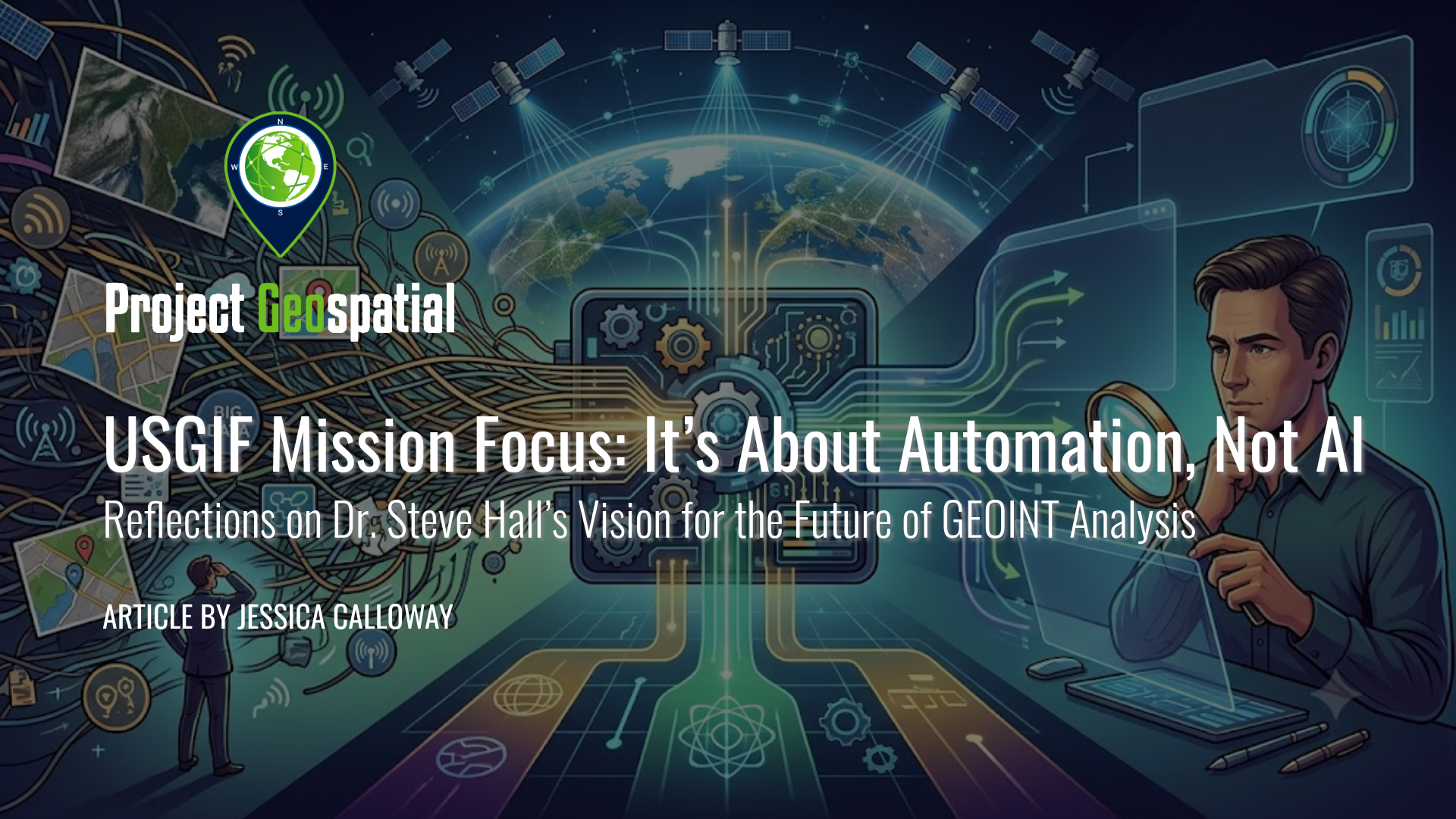
USGIF Mission Focus: It’s About Automation, Not AI
Discover why NGA’s Deputy Director of Analysis, Dr. Steve Hall, believes the future of GEOINT is driven by automation rather than just artificial intelligence. In this recap of the recent USGIF Mission Focus event, explore how big data pipelines and automated workflows are empowering intelligence analysts to focus on their greatest competitive advantage: human expertise, critical thinking, and complex problem-solving.

Beyond the Map: A First-Timer’s Journey into the GEOINT Ecosystem
Explore a newcomer's journey into the geospatial intelligence ecosystem at the GEOINT Symposium 2026. Former Project Geospatial intern Jessica Calloway shares her firsthand experience on how emerging tech, cutting-edge GeoAI, and a welcoming culture of mentorship are shaping diverse career paths. Discover how the GEOINT community is transforming massive data into actionable clarity and opening doors for fresh perspectives in this Geospatial Frontiers exclusive.
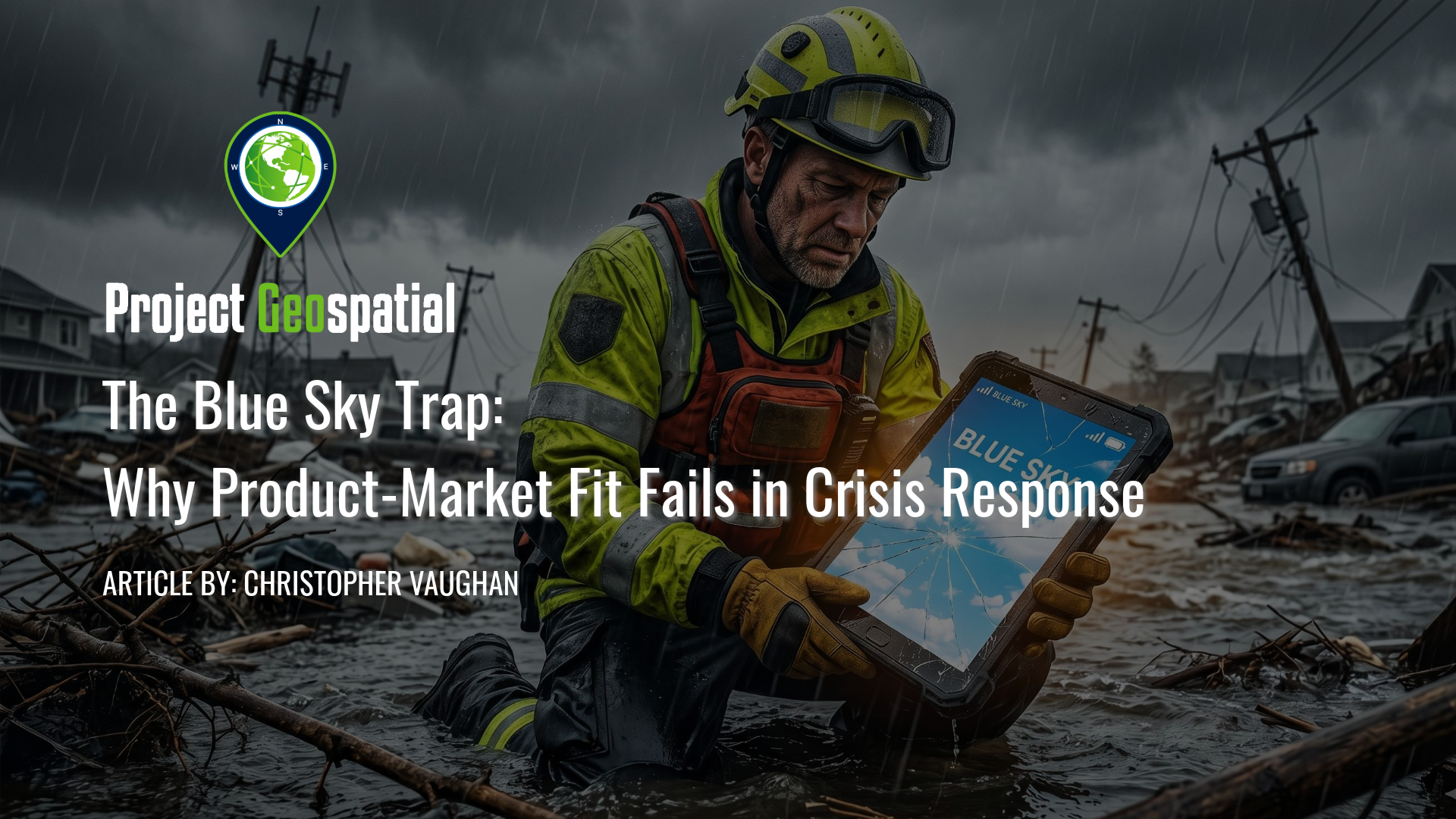
The Blue Sky Trap: Why Product-Market Fit Fails in Crisis Response
Why does cutting-edge tech so often fail when natural disasters strike? In The Blue Sky Trap: Why Product-Market Fit Fails in Crisis Response, industry expert Chris explores the dangerous disconnect between climate-controlled Silicon Valley development and the brutal, offline reality of emergency management. Discover why standard SaaS models crumble in chaotic "Gray Sky" environments and learn the non-negotiable design principles, such as offline-first architecture, low-bandwidth optimization, and standard-adjacent integration, required to build disaster tech that first responders can actually trust. Whether you are a tech founder, product manager, or public safety professional, learn how to avoid the Blue Sky Trap and design resilient tools that save lives when the grid goes down.
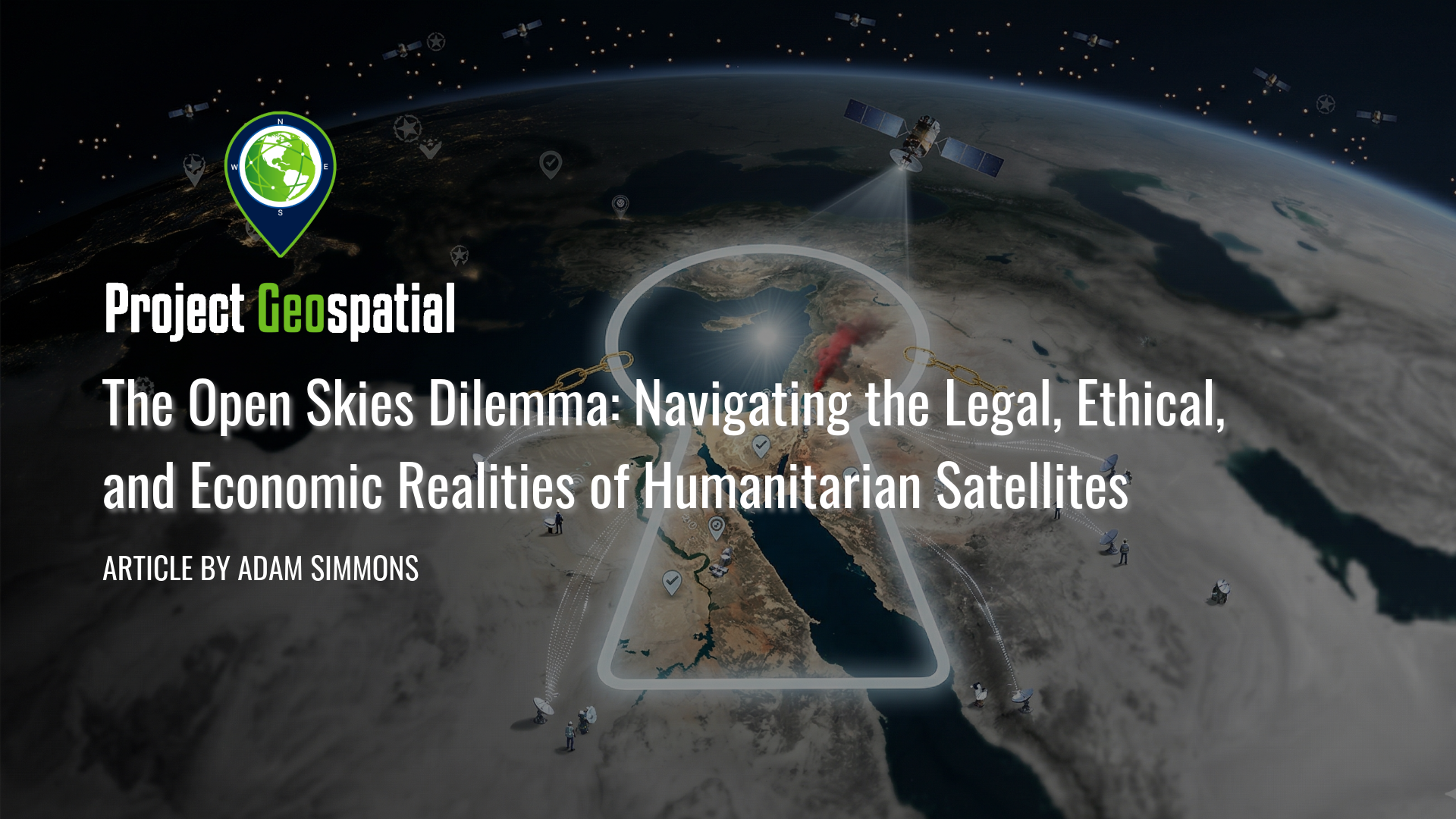
The Open Skies Dilemma: Navigating the Legal, Ethical, and Economic Realities of Humanitarian Satellites
As the democratization of space faces a harsh reality check, the 2026 Middle East geospatial embargo has exposed a critical vulnerability in global transparency. While "New Space" promised an era of irrefutable clarity for human rights monitors, most commercial providers remain inextricably tethered to national security mandates and defense-oriented anchor contracts. This comprehensive investigation deconstructs the legal labyrinth of shutter control, the ethical dual-use dilemmas of high-resolution imagery, and the "Defense Paradox" that currently forces orbital abundance to prioritize military ISR over the public good. Explore how the Common Space initiative is pioneering a radical shift toward community-governed satellites and "club good" financial models to ensure that the "science of where" becomes an unassailable tool for humanitarian resilience rather than state surveillance.
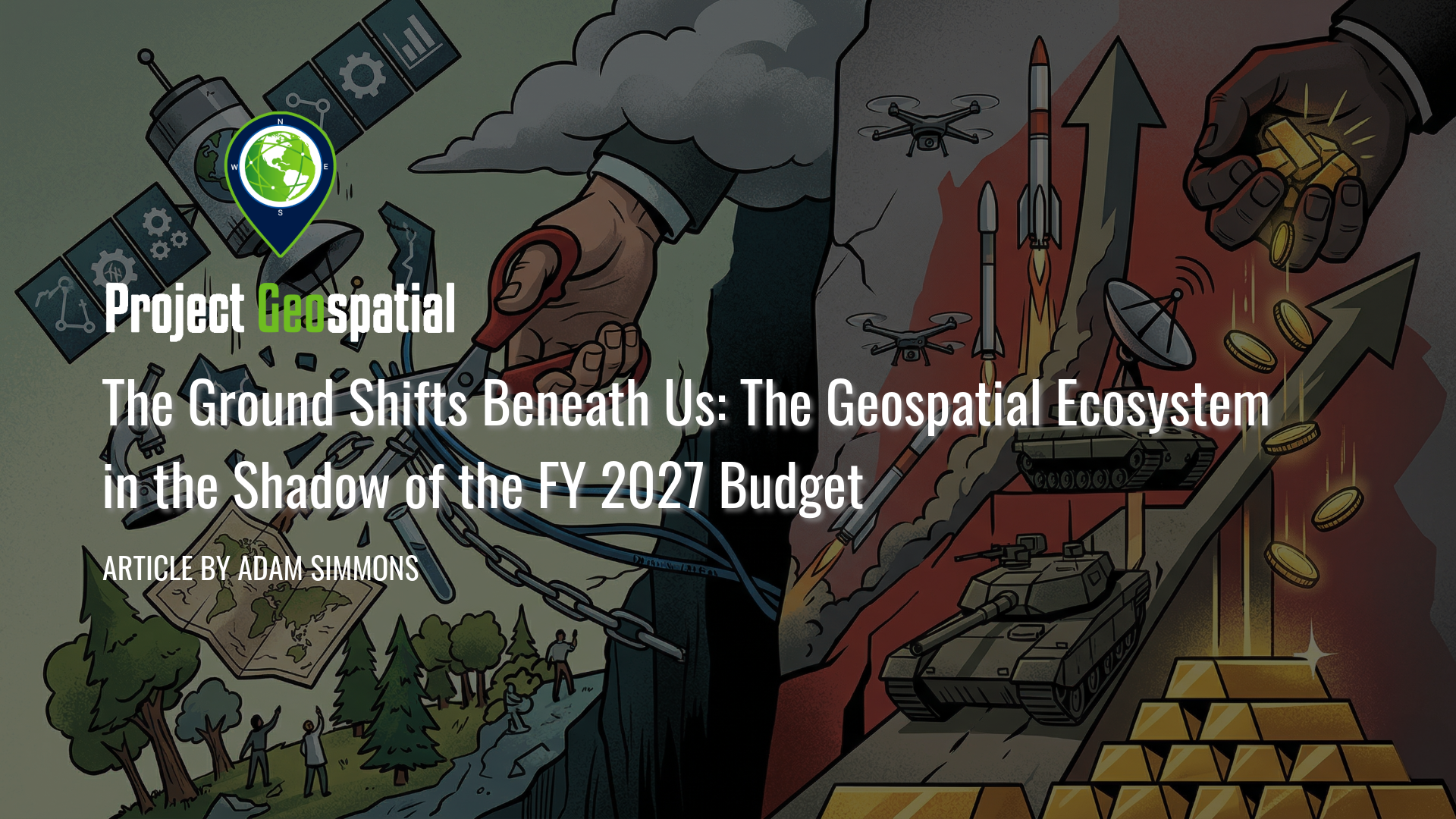
The Ground Shifts Beneath Us: The Geospatial Ecosystem in the Shadow of the FY 2027 Budget
The Fiscal Year 2027 budget request signals a seismic shift in American priorities, proposing a staggering $1.5 trillion for national defense while systematically dismantling decades of civilian Earth science and environmental monitoring. As the administration pivots toward a "Department of War" and aggressive commercial space acquisition , vital programs like NASA’s SERVIR and the USGS Ecosystems Mission Area face total elimination, threatening the foundational data streams that power global food security and domestic disaster response. This comprehensive analysis explores the deepening divide within the geospatial ecosystem, the rise of private-sector intelligence, and the long-term strategic risks of abandoning open-source scientific leadership in the face of intensifying global competition. How will this radical realignment of federal funding redefine the future of spatial awareness and national security?
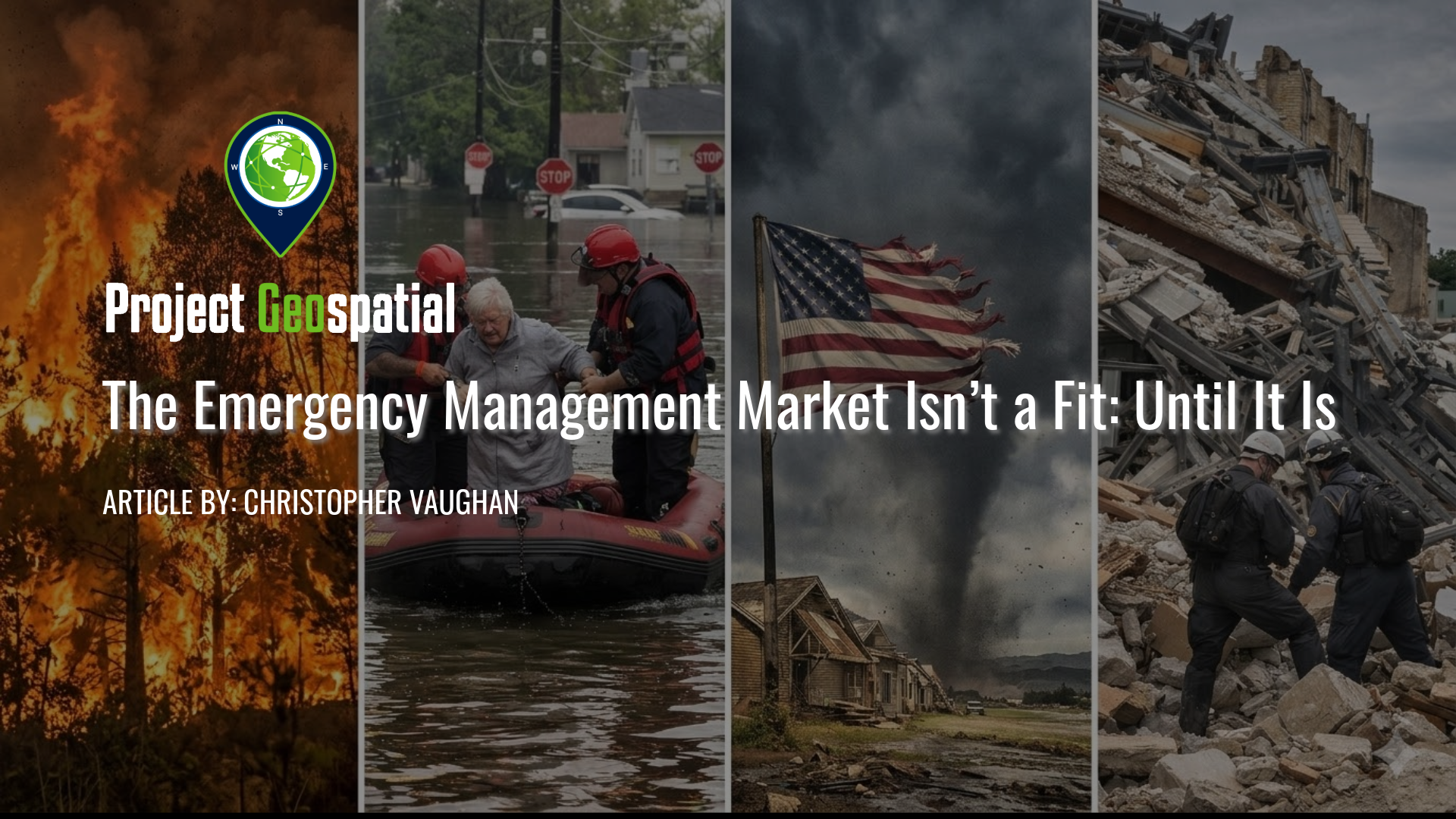
The Emergency Management Market Isn’t a Fit: Until It Is
The emergency management market is often dismissed by tech founders and investors as a "slow" and "bureaucratic" sector. However, as disasters become more frequent and expensive, this $137 billion "sleeping giant" is rapidly evolving into a mission-critical landscape. This article explores the shift from outdated "boots-on-the-ground" processes to high-velocity geospatial analytics and AI-driven assessments that shorten the gap between a survivor's worst day and their first recovery check. Learn why readiness matters, how to achieve true product-market fit in a crisis, and why the "unattractive" EM market is the only one that truly matters when the sirens start.
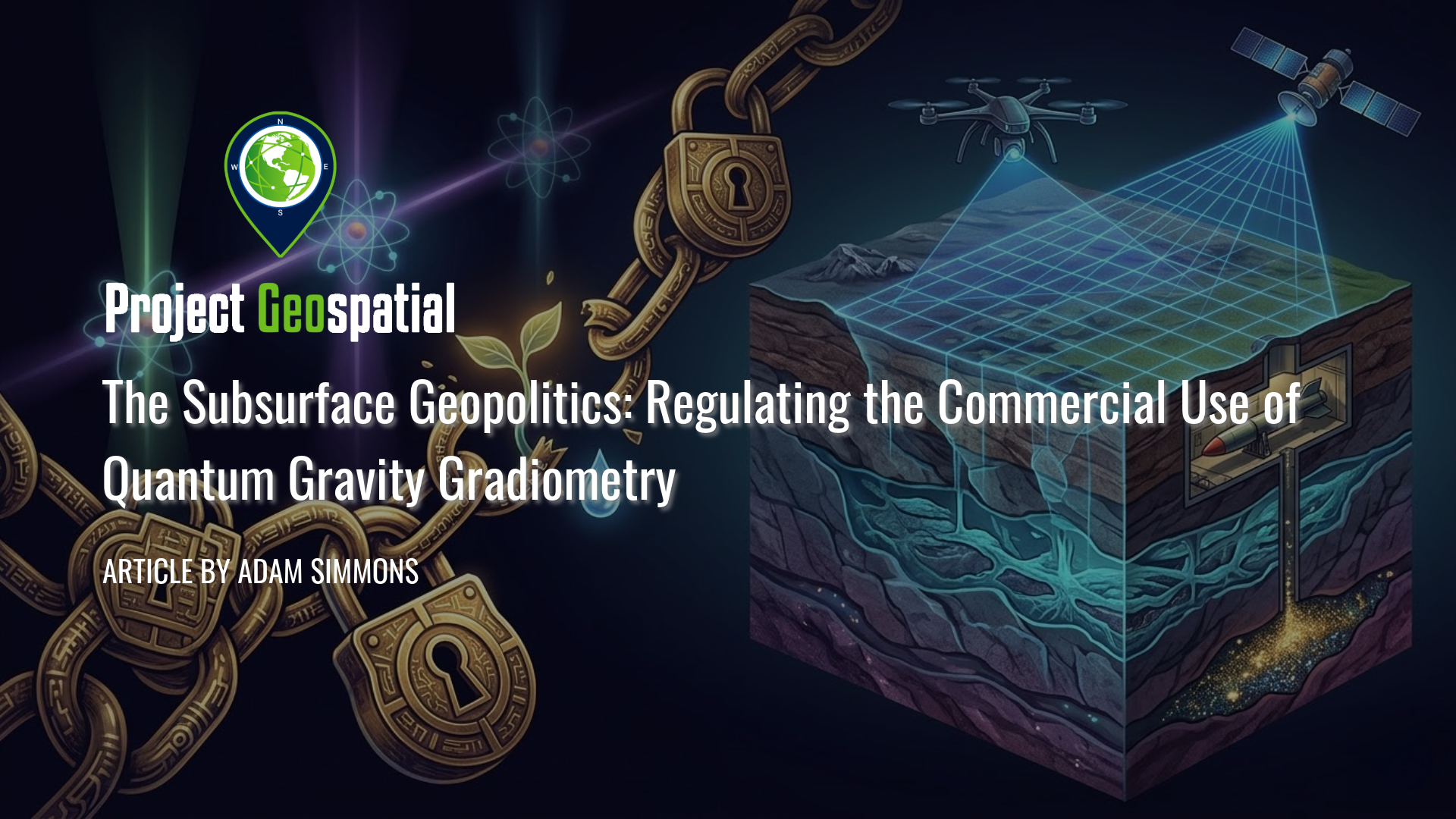
The Subsurface Geopolitics: Regulating the Commercial Use of Quantum Gravity Gradiometry
As Quantum Gravity Gradiometry (QGG) renders the Earth’s crust functionally transparent, a high-stakes geopolitical battle is emerging over the regulation of the subsurface. This article explores the tension between the commercial promise of uncovering critical minerals and tracking climate change against the national security risks of exposing clandestine military assets. Discover how international frameworks and "shutter control" policies are evolving to manage this revolutionary sensing technology, where the ability to see deep underground is transforming global transparency, resource competition, and strategic stability.
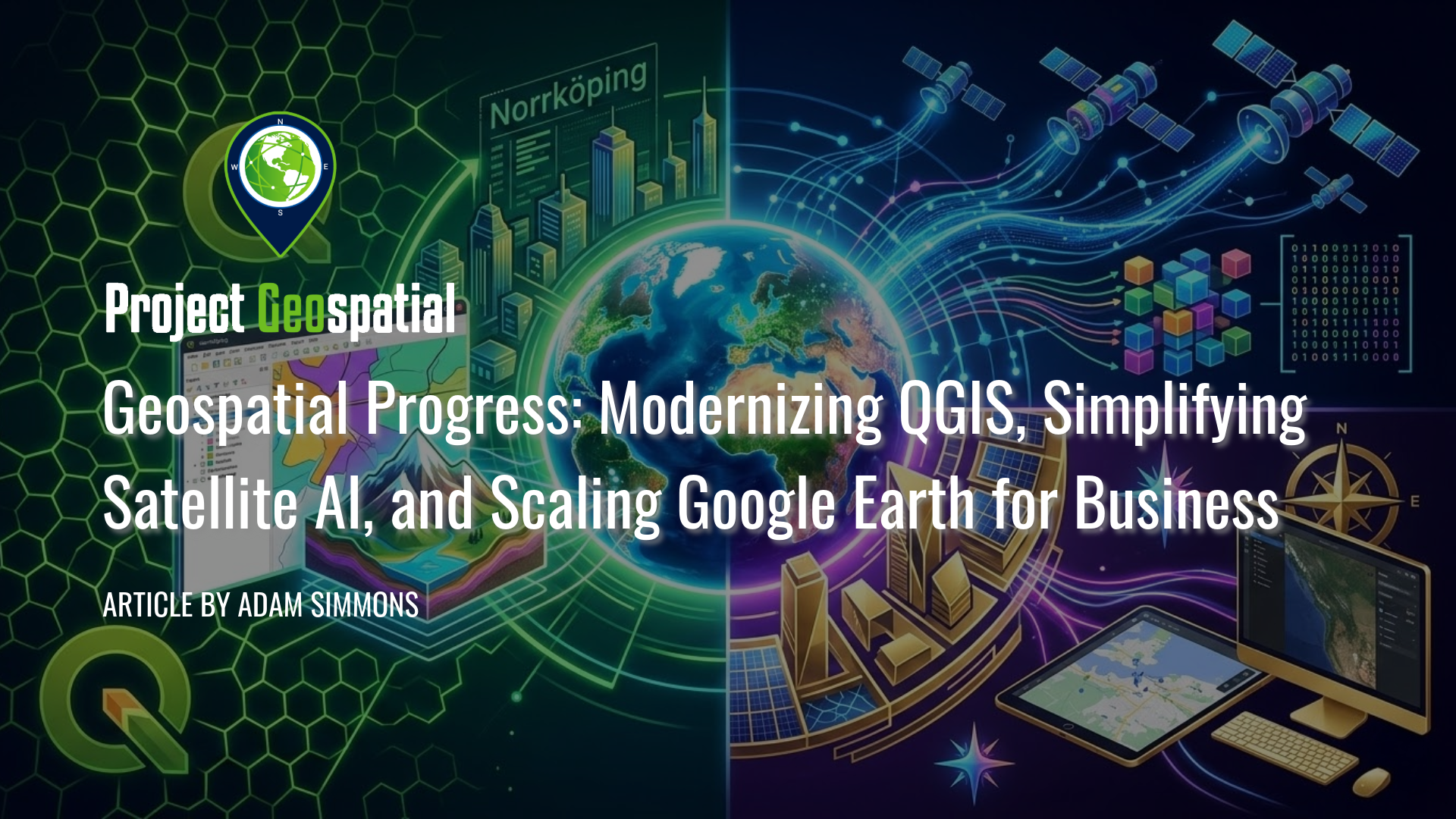
Geospatial Progress: Modernizing QGIS, Simplifying Satellite AI with Alpha Earth, and Scaling Google Earth for Business
The geospatial industry witnessed a transformative week with three major announcements that bridge the gap between open-source legacy and AI-driven enterprise intelligence. Leading the charge is the long-awaited release of QGIS 4.0 "Norrköping," a massive structural leap that migrates the premier open-source desktop GIS to the Qt6 framework for superior performance and security. Simultaneously, Google DeepMind unveiled its 2025 AlphaEarth Foundations update, introducing 64-dimensional satellite embeddings that allow developers to "see through" cloud cover and decode complex planetary variables with unprecedented mathematical precision. Finally, Google Earth officially transitioned into a powerful business ecosystem with the launch of its Professional and Professional Advanced tiers, integrating Gemini-powered "agentic" AI and domain-specific data layers for high-stakes urban planning and sustainability workflows. Together, these releases signal a new era where raw planetary data is no longer a bottleneck but an analysis-ready instrument for global decision-making.
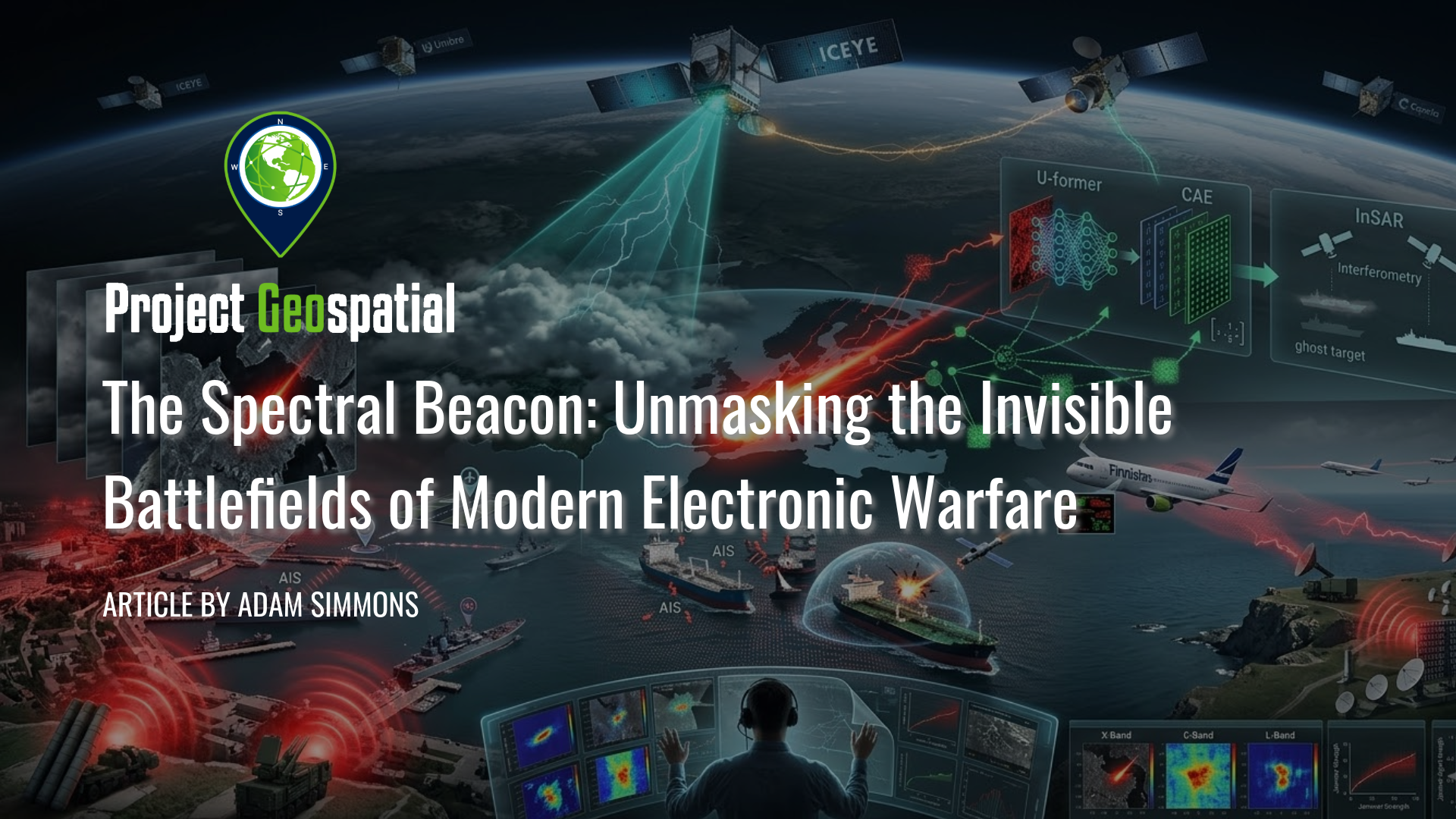
The Spectral Beacon: Unmasking the Invisible Battlefields of Modern Electronic Warfare
Explore how advanced Electronic Warfare (EW) is reshaping modern conflict, from disrupting satellite signals and misdirecting global shipping to the subtle use of AI in spectral warfare. As the world grows increasingly dependent on GPS and other critical RF bands, the contest for spectral dominance moves beyond science fiction into a very real and present national security imperative. This deep dive into the technology and tactics of invisible conflict reveals how electronic signals can disable high-tech forces without firing a single bullet.
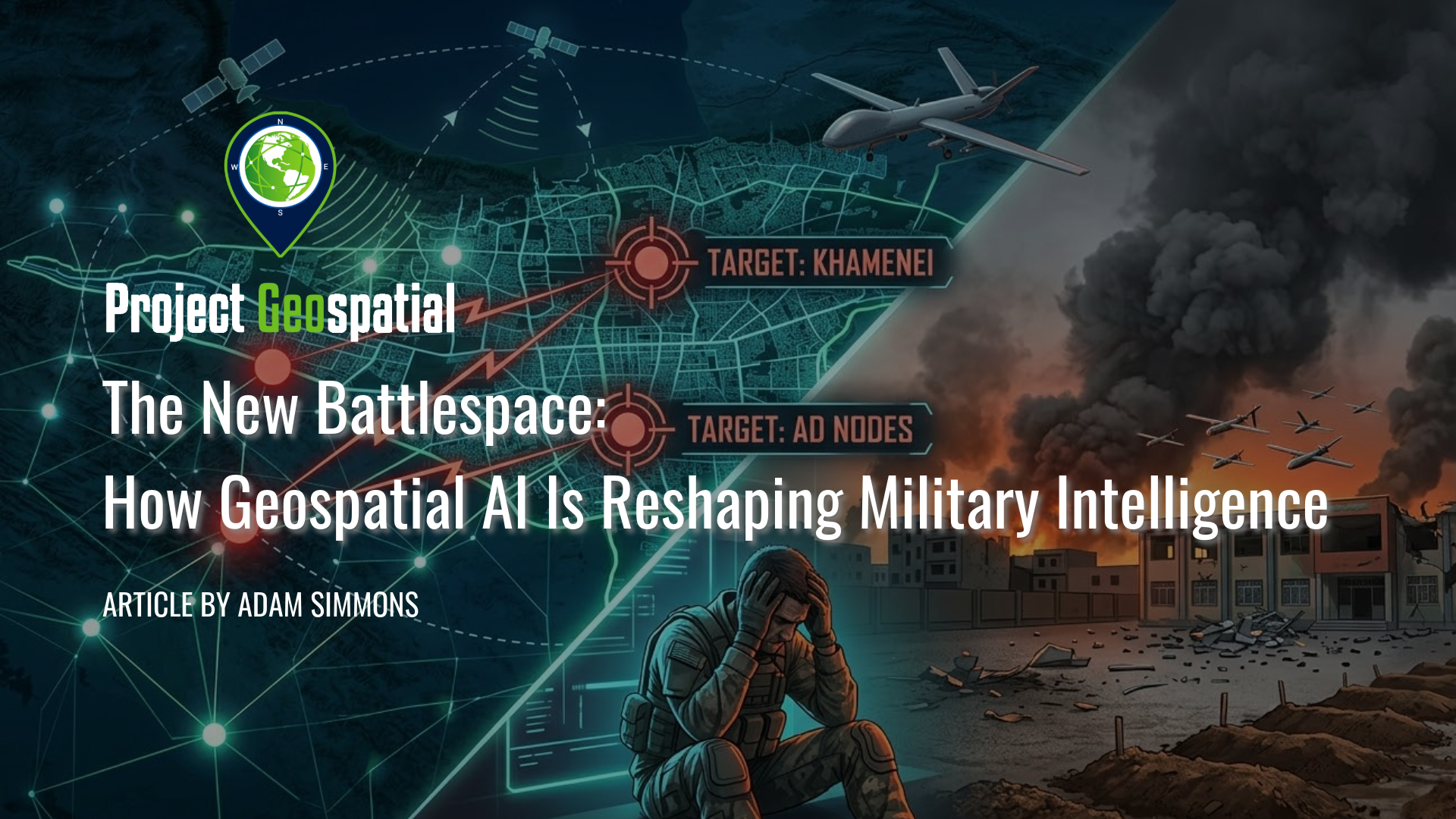
The New Battlespace: How Geospatial AI Is Reshaping Military Intelligence
The 2026 conflict in Iran marks a terrifying turning point in military history: the birth of the algorithmic battlespace. Through Operation Epic Fury, the United States and Israel have deployed a "kill web" driven by Geospatial AI, compressing decision-making from weeks to mere seconds. While systems like Project Maven and autonomous drone swarms offer unprecedented tactical precision, the human cost remains devastatingly high, evidenced by the tragic Minab school bombing and the growing psychological toll on remote operators. As Silicon Valley giants like Anthropic and Palantir clash over the ethics of AI-driven warfare, the world faces a fractured global economy and a new reality where machine-speed violence outpaces human thought.
The Thermodynamics of Hype: Why Space Won't Save AI's Energy Crisis (Yet)
Discover why the collision between the AI sector's accelerating energy demands and the commercial space economy is generating massive hype, and why a harsh thermodynamic reality check is required. While venture capital chases the mirage of orbital data centers and space-based solar power, the physics of vacuum heat rejection and lengthy deployment timelines make these near-term fantasies. Instead, uncover the true, highly profitable foundations of the 2026 space age: leveraging advanced Geospatial Intelligence (GEOINT) and physical AI to optimize strained terrestrial energy grids, deploying hyper-efficient edge compute architectures, and scaling nuclear microreactors for resilient orbital operations. Cut through the pitch-deck promises and explore the unglamorous, deep-tech infrastructure actively solving the bottlenecks of the physical economy.