


GEOSPATIAL FRONTIERS
A Publication by Project Geospatial
LOOKING BEYOND
THE MAP
Geospatial Frontiers, a new publication from Project Geospatial, brings together leading voices and experts from across the geospatial ecosystem to tackle the industry's most pressing challenges. Through in-depth articles and discussions, Geospatial Frontiers aims to explore innovative solutions and spark critical conversations that will shape the future of geospatial technology and its applications.
Contributing Authors






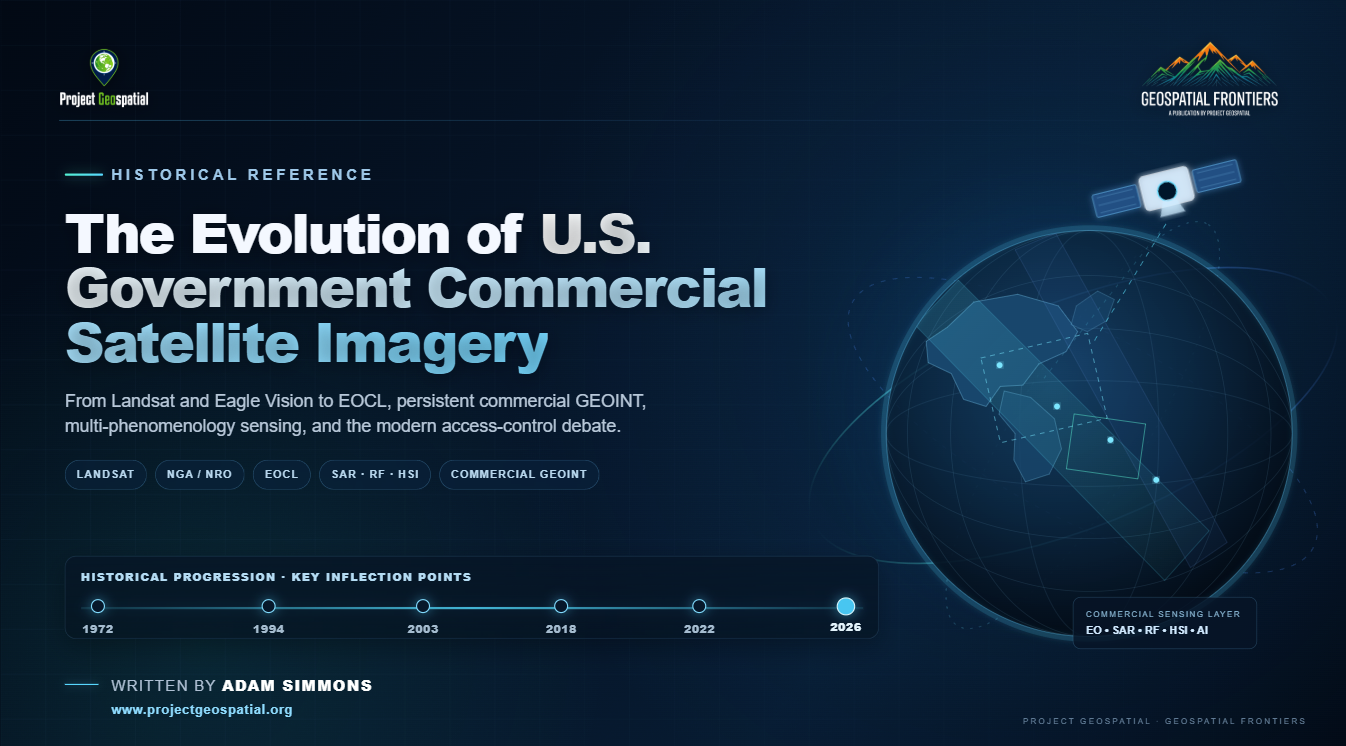
The Evolution of Commercial Satellite Imagery in the U.S. Government
Commercial satellite imagery has evolved from a tightly controlled national-security capability into a foundational layer of the modern U.S. geospatial intelligence architecture. This historical overview traces that transformation from Landsat, EOSAT, Eagle Vision, and the early commercialization experiments through ClearView, NextView, EnhancedView, EOCL, and today’s expanding commercial sensing ecosystem of optical imagery, SAR, hyperspectral, radio frequency, AI, and analytics. It also examines the policymakers, intelligence leaders, scientists, companies, and acquisition strategies that helped build the government-commercial partnership—and the emerging 2026 debate over access, managed distribution, national security, and how the United States governs an increasingly global and commercially driven GEOINT environment.
The Algorithmic Tradecraft: Synthesizing Artificial Intelligence and Automation in Modern Geospatial Intelligence Workflows
As artificial intelligence and end-to-end automation fundamentally reshape the national security apparatus, the traditional "human-in-the-loop" intelligence cycle is rapidly becoming obsolete. This article explores the profound paradigm shift in modern geospatial intelligence (GEOINT), detailing how algorithmic machine learning models are replacing foundational analysis workflows and forcing human tradecraft to evolve from basic object detection to high-stakes algorithmic auditing. Discover the hard operational truths behind the data deluge, impending workforce displacement, and the critical future of human-machine symbiosis at mission speed.
USGIF Mission Focus: It’s About Automation, Not AI
Discover why NGA’s Deputy Director of Analysis, Dr. Steve Hall, believes the future of GEOINT is driven by automation rather than just artificial intelligence. In this recap of the recent USGIF Mission Focus event, explore how big data pipelines and automated workflows are empowering intelligence analysts to focus on their greatest competitive advantage: human expertise, critical thinking, and complex problem-solving.
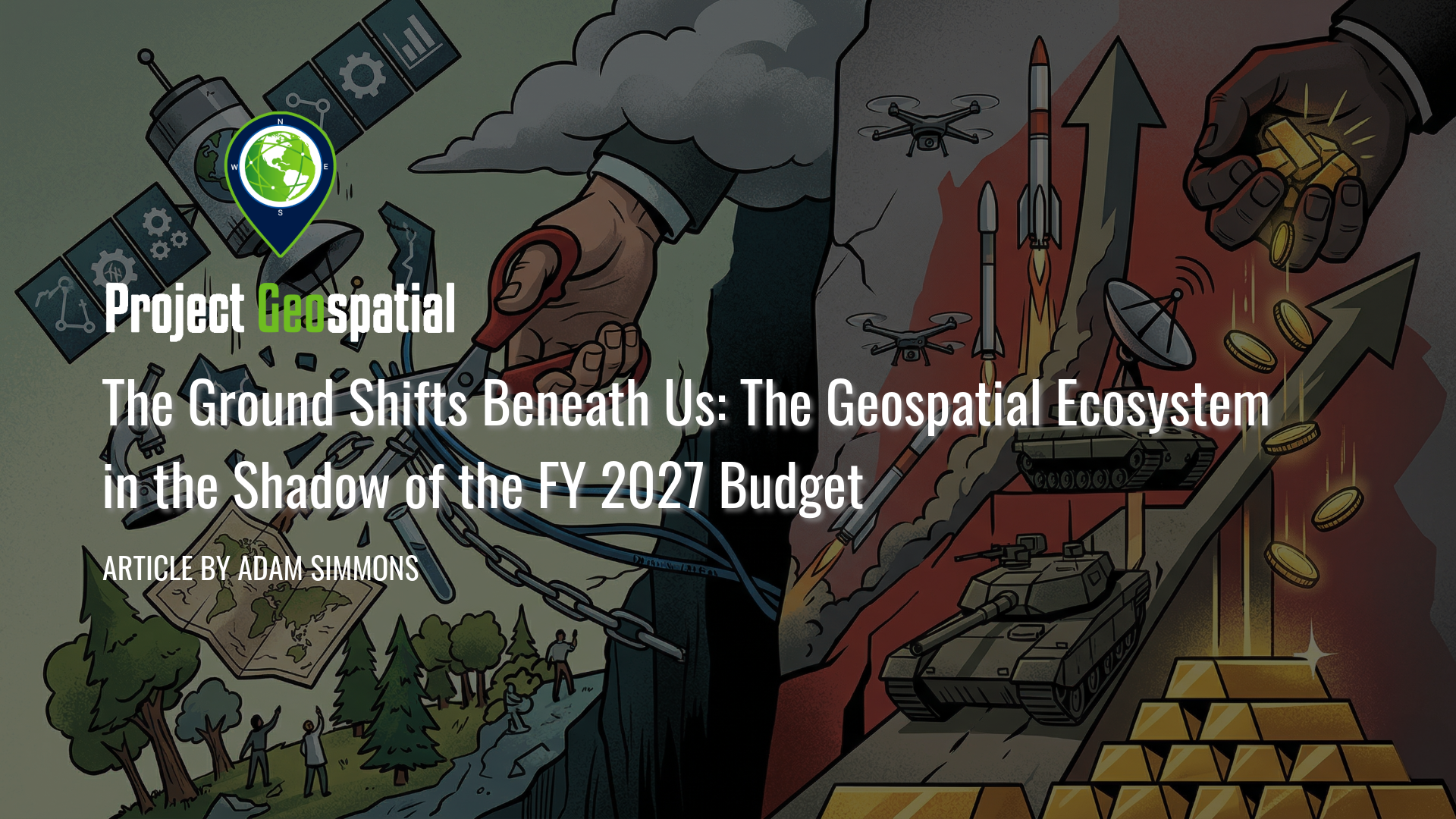
The Ground Shifts Beneath Us: The Geospatial Ecosystem in the Shadow of the FY 2027 Budget
The Fiscal Year 2027 budget request signals a seismic shift in American priorities, proposing a staggering $1.5 trillion for national defense while systematically dismantling decades of civilian Earth science and environmental monitoring. As the administration pivots toward a "Department of War" and aggressive commercial space acquisition , vital programs like NASA’s SERVIR and the USGS Ecosystems Mission Area face total elimination, threatening the foundational data streams that power global food security and domestic disaster response. This comprehensive analysis explores the deepening divide within the geospatial ecosystem, the rise of private-sector intelligence, and the long-term strategic risks of abandoning open-source scientific leadership in the face of intensifying global competition. How will this radical realignment of federal funding redefine the future of spatial awareness and national security?