

GEOSPATIAL FRONTIERS
A Publication by Project Geospatial
LOOKING BEYOND
THE MAP
Geospatial Frontiers, a new publication from Project Geospatial, brings together leading voices and experts from across the geospatial ecosystem to tackle the industry's most pressing challenges. Through in-depth articles and discussions, Geospatial Frontiers aims to explore innovative solutions and spark critical conversations that will shape the future of geospatial technology and its applications.
Contributing Authors






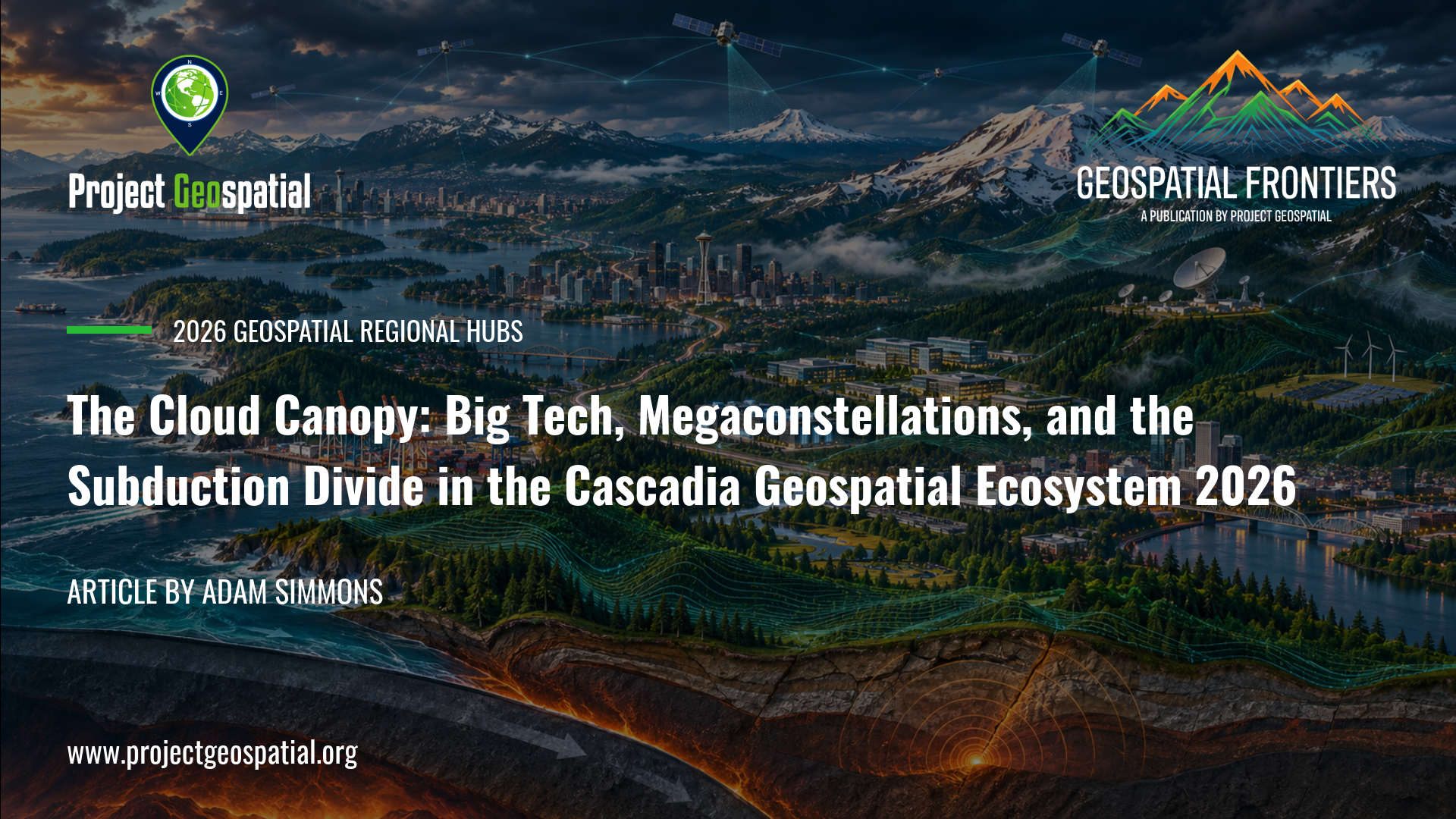
The Cloud Canopy: Big Tech, Megaconstellations, and the Subduction Divide in the Cascadia Geospatial Ecosystem 2026
The Pacific Northwest has emerged as one of North America's most influential geospatial economic hubs, connecting the technology and industrial ecosystems of Washington, Oregon, and British Columbia. From Microsoft's cloud computing infrastructure and Amazon Leo's satellite manufacturing to commercial Earth observation, precision forestry, maritime intelligence, and seismic hazard mapping, the Cascadia corridor represents a powerful convergence of spatial technologies and regional industries. In the sixth installment of Geospatial Frontiers' Geospatial Economic Hubs series, Adam Simmons examines the companies, institutions, investments, and economic forces shaping Cascadia's geospatial economy, exploring its competitive advantages, cross-border dependencies, structural challenges, and long-term potential in the global geospatial industry.

Unlocking Prosperity: How a Military Ontology Can Build a More Resilient Economy
Discover how the MIDB ontology can revolutionizing national infrastructure resilience by transforming raw data into actionable intelligence. This in-depth article explores how a structured framework has the potential to enhance AI capabilities, identifies critical nodes like EV Gigafactories, and could fostes innovation through an open-source government framework, leading to a more secure and prosperous future.