


GEOSPATIAL FRONTIERS
A Publication by Project Geospatial
LOOKING BEYOND
THE MAP
Geospatial Frontiers, a new publication from Project Geospatial, brings together leading voices and experts from across the geospatial ecosystem to tackle the industry's most pressing challenges. Through in-depth articles and discussions, Geospatial Frontiers aims to explore innovative solutions and spark critical conversations that will shape the future of geospatial technology and its applications.
Contributing Authors






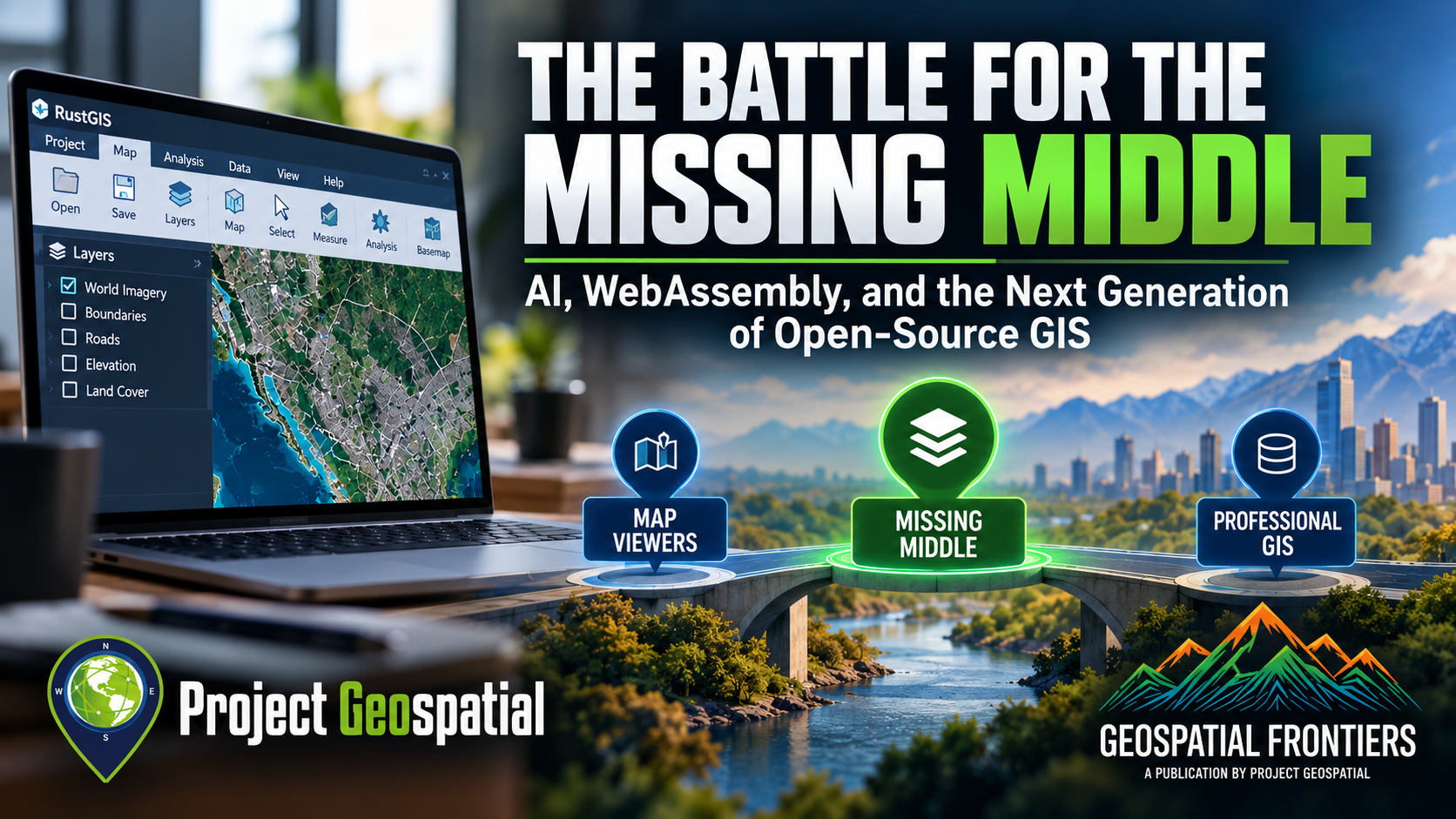
The Battle for the Missing Middle: AI, WebAssembly, and the Next Generation of Open-Source GIS
The controversy surrounding RustGIS and developer Qiusheng Wu has ignited a broader debate about the future of open-source GIS, AI-assisted software development, and competition within the geospatial industry. As artificial intelligence lowers barriers to building complex applications and WebAssembly expands browser-based GIS capabilities, established assumptions about software engineering, technical expertise, and community acceptance are being challenged. Project Geospatial examines the tensions between innovation and reliability, the cultural resistance to AI-generated code, and the emerging "missing middle" of users seeking accessible geospatial analysis without the complexity of traditional GIS platforms. The debate raises fundamental questions about how the next generation of geospatial software will be developed, evaluated, maintained, and ultimately accepted by the communities it serves.